Echocardiography-derived hemodynamic forces in cardiac resynchronization therapy: association with reverse remodeling and long-term outcomes - Takeaways - MDSpire
Coming Soon: Introducing MDSpire News. Learn more
Conexiant’s news site is now MDSpire News. Learn more

Hemodynamic Forces from Echocardiography in Cardiac Resynchronization Therapy: Links to Reverse Remodeling and Long-Term Prognosis

  • By

  • Roberto Tarantini

  • Willem Gerrits

  • Cheyenne S.L. Chiu

  • Leonie Smit

  • Gilbert Heltzel

  • Luuk H.G.A. Hopman

  • Philippe C. Wouters

  • Maarten J. Cramer

  • Frebus J. van Slochteren

  • Rene van Es

  • Alexander H. Maass

  • Michiel Rienstra

  • Cornelis P. Allaart

  • Kevin Vernooy

  • Antonius M.W. van Stipdonk

  • Frederik J. de Lange

  • Dorien Laenens

  • Philippe van Rosendael

  • Jeroen J. Bax

  • Nina Ajmone Marsan

  • September 9, 2026

Share

  • 1

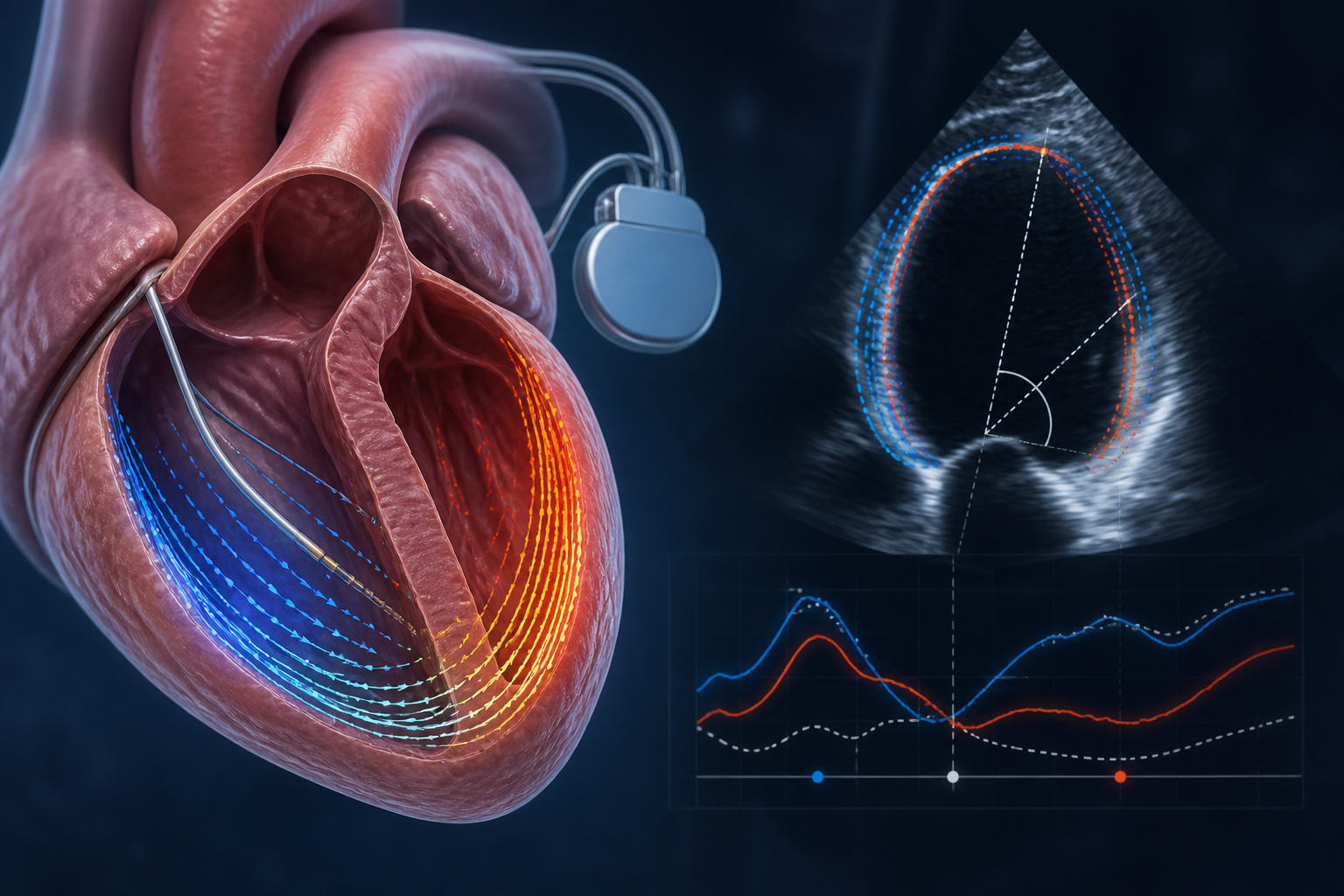
    Echocardiography-derived hemodynamic force (HDF) parameters provide additional insight into left ventricular mechanics in patients undergoing cardiac resynchronization therapy (CRT).

  • 2

    Adding baseline systolic angle to established markers significantly improves model fit for CRT response but does not significantly improve discrimination.

  • 3

    CRT responders show significant improvements in HDF parameters at 6 months after implantation, while nonresponders show no significant changes.

  • 4

    Baseline systolic angle is independently associated with the composite endpoint of all-cause mortality or cardiovascular hospitalization over a median follow-up of 9.3 years.

  • 5

    Further prospective research is needed to determine whether HDF assessment improves clinical risk prediction in patients undergoing CRT.

Original Source(s)

Related Content