Switching between complement inhibitors in paroxysmal nocturnal hemoglobinuria: Analysis of strategy, efficacy, and safety - Takeaways - MDSpire
Coming Soon: Introducing MDSpire News. Learn more
Conexiant’s news site is now MDSpire News. Learn more

Evaluating the Transition Between Complement Inhibitors in Paroxysmal Nocturnal Hemoglobinuria: A Study on Strategy, Effectiveness, and Safety

  • By

  • Morag Griffin

  • Bruno Fattizzo

  • Jong Wook Lee

  • Richard J. Kelly

  • Roochi Trikha

  • Yasutaka Ueda

  • Jun-ichi Nishimura

  • Christopher J. Patriquin

  • Alexander Röth

  • Petra Muus

  • Jens Panse

  • Miguel Gómez Álvarez

  • Alexandra Pike

  • Talha Munir

  • Shreyans Gandhi

  • Austin Kulasekararaj

  • July 1, 2026

Share

  • 1

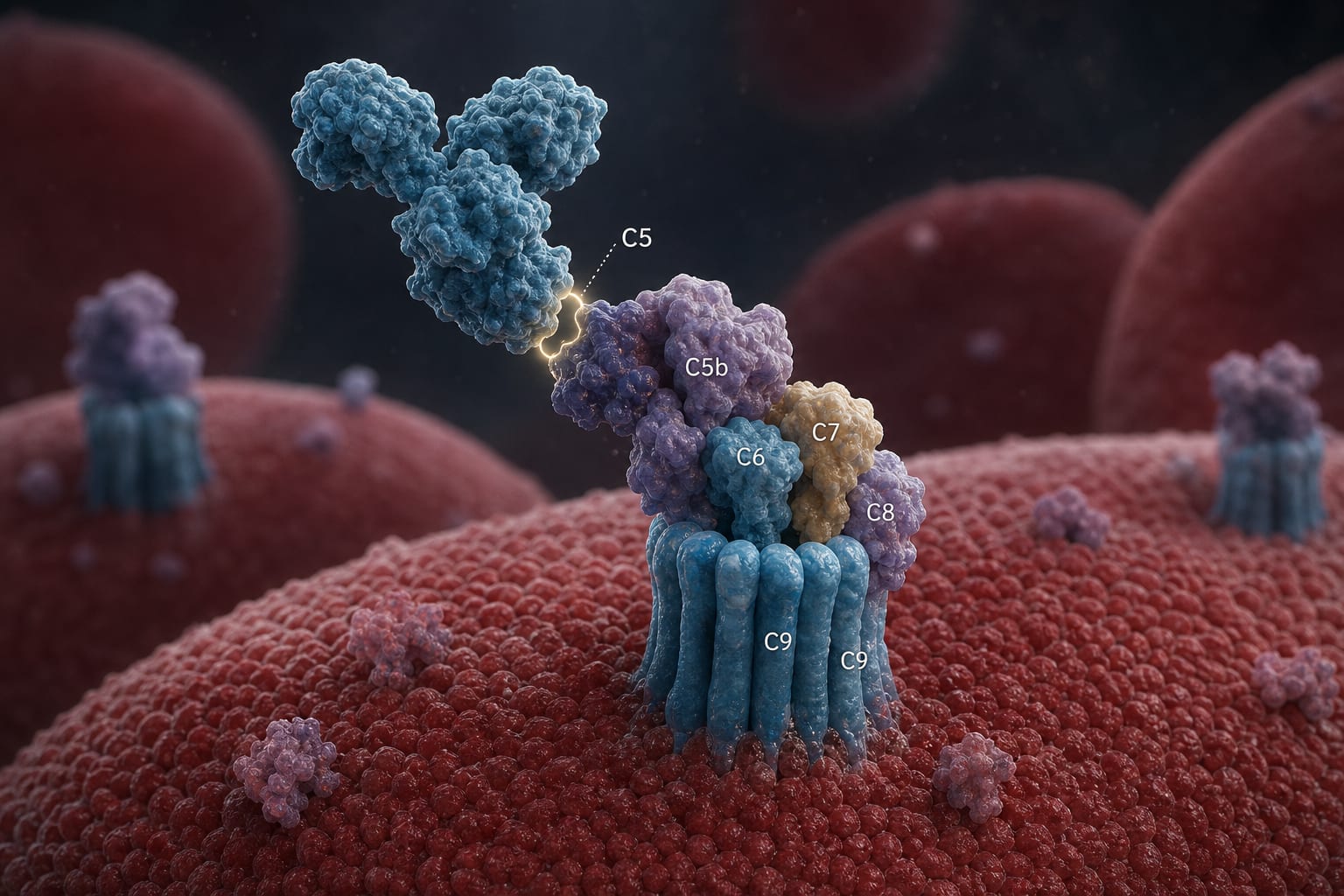
    Paroxysmal nocturnal hemoglobinuria (PNH) is caused by a mutation in the PIGA gene, leading to uncontrolled complement activation and severe symptoms.

  • 2

    Three C5 inhibitors are approved for PNH treatment: eculizumab, ravulizumab, and crovalimab, each with different administration schedules.

  • 3

    Proximal complement inhibitors, including pegcetacoplan, iptacopan, and danicopan, are also approved and used in combination with C5 inhibitors.

  • 4

    The study analyzed 149 changes in complement inhibitors among 65 patients, highlighting the need for guidance on switching treatments.

  • 5

    Eight percent of patients experienced hemolytic events within 14 days of switching from terminal to proximal complement inhibitors.

Original Source(s)

Related Content