Extracorporeal Life Support (ECLS) for Pulmonary Vein Stenosis Interventions - Takeaways - MDSpire
Coming Soon: Introducing MDSpire News. Learn more
Conexiant’s news site is now MDSpire News. Learn more

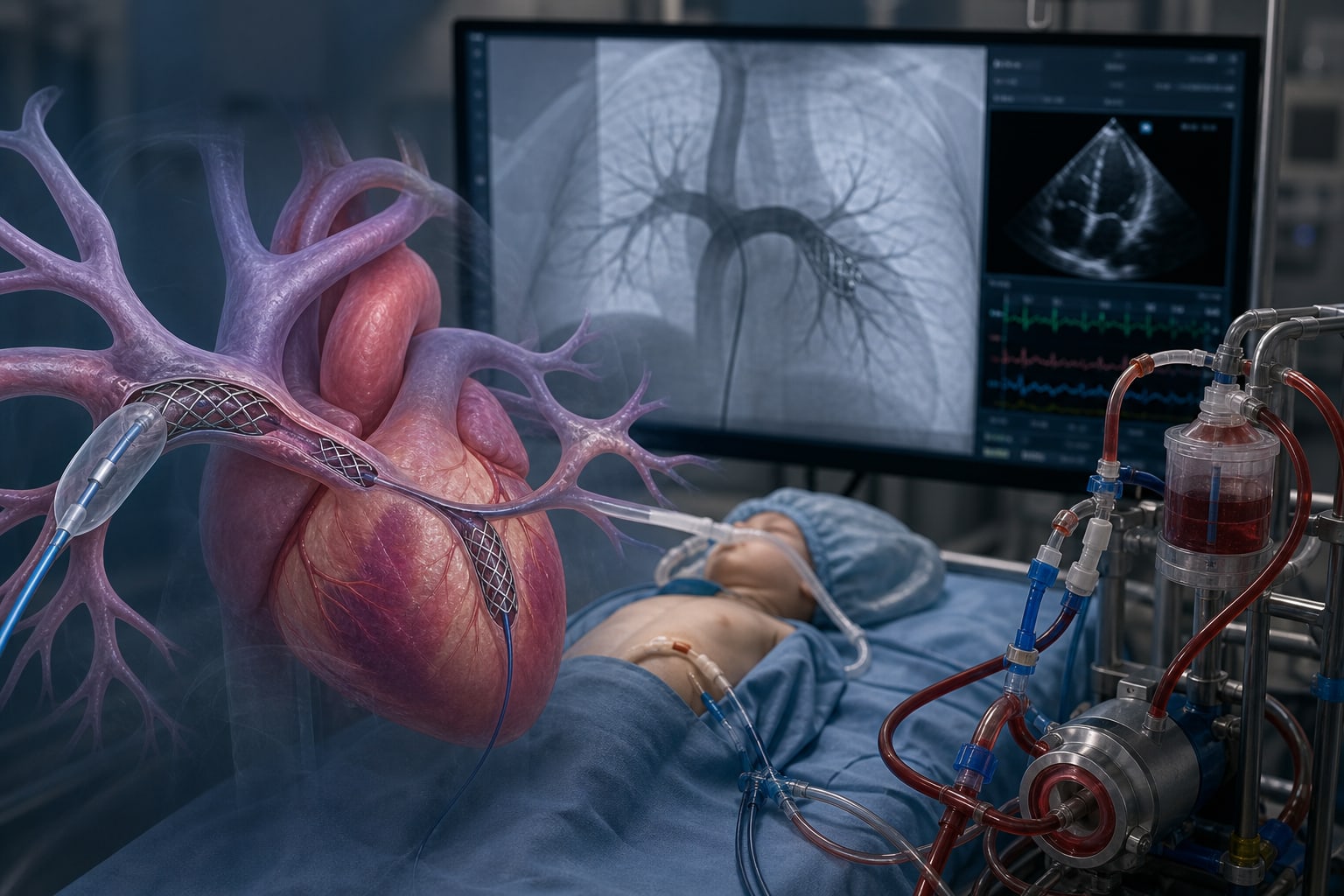
Use of Extracorporeal Life Support in Interventions for Pediatric Pulmonary Vein Stenosis

  • By

  • Stephanie M. Tsoi

  • Roberta L. Keller

  • Loren D. Sacks

  • Vinod Sebastian

  • Sanjeev A. Datar

  • Michael A. Smith

  • Jason Boehme

  • Jeffrey R. Fineman

  • Elena K. Amin

  • August 20, 2026

Share

  • 1

    Pediatric pulmonary vein stenosis (PVS) has a mortality rate of 40% for 1–2 vessel disease and 80% for ≥ 3 vessel disease within 4 years of diagnosis.

  • 2

    Advancements in pediatric PVS management include serial cardiac catheterizations with balloon angioplasty and stent placement, despite high risks.

  • 3

    Catheterization for multivessel disease has a 12% rate of catastrophic adverse events, with stroke being the most common.

  • 4

    Veno-arterial extracorporeal life support (VA-ECLS) was utilized in three pediatric patients during interventions, leading to favorable outcomes.

  • 5

    All patients supported by VA-ECLS showed improvements in venous obstruction and no adverse cerebrovascular events during their procedures.

Original Source(s)

Related Content