Molecular changes during AT/RT progression associated with epithelial–mesenchymal transition and extracellular matrix changes - Takeaways - MDSpire

Molecular changes during AT/RT progression associated with epithelial–mesenchymal transition and extracellular matrix changes

  • By

  • Lea Altendorf

  • Anton Althammer

  • Rajanya Roy

  • Karoline Hack

  • Flavia W. de Faria

  • Arend Koch

  • Vanessa Thaden

  • Melanie Schoof

  • Martin U. Schuhmann

  • Peter Hauser

  • Pascal D. Johann

  • Martin Hasselblatt

  • Michael C. Frühwald

  • Kornelius Kerl

  • Ulrich Schüller

  • July 1, 2026

  • 0 min

Share

  • 1

    AT/RT are aggressive CNS tumors in young children with a median overall survival of 9 to 17 months, depending on risk groups.

  • 2

    95% of AT/RT patients have SMARCB1 mutations, while a rare subset has SMARCA4 mutations, both linked to tumor suppression.

  • 3

    AT/RT patients typically undergo surgery and chemotherapy, but radiotherapy is rarely recommended for those under 3 years.

  • 4

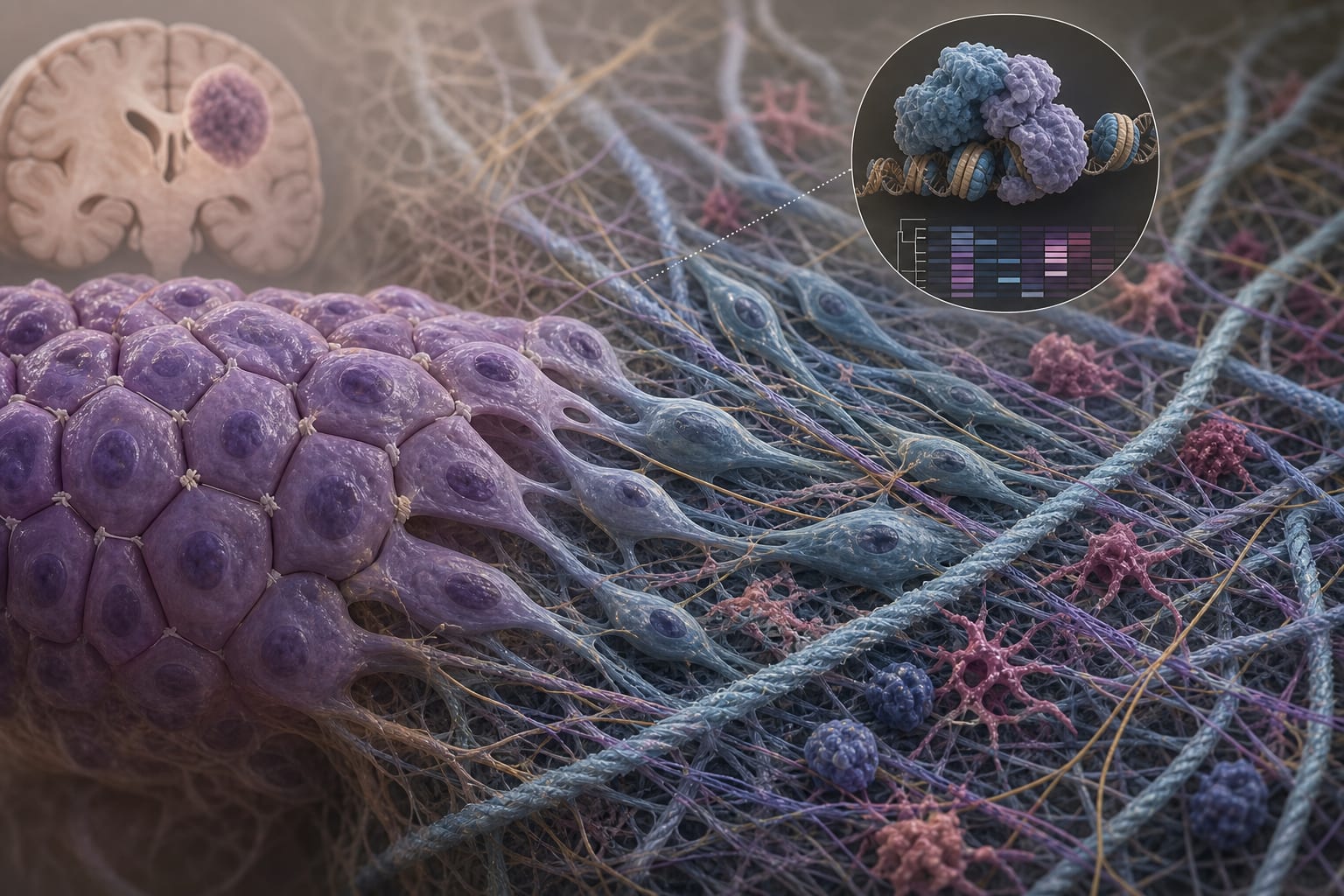
    The study identifies transcriptomic differences in paired primary and recurrent AT/RT tumors, highlighting therapy-resistant cells.

  • 5

    Increased extracellular matrix remodeling and epithelial-mesenchymal transition are associated with therapy resistance in AT/RT.

Original Source(s)

Related Content