Establishment of a novel lupus mesenteric vasculitis mouse model and exploration of its exacerbation mechanisms - Takeaways - MDSpire
Coming Soon: Introducing MDSpire News. Learn more
Conexiant’s news site is now MDSpire News. Learn more

Development of a New Mouse Model for Lupus Mesenteric Vasculitis and Investigation of Its Aggravation Mechanisms

  • By

  • Maki Fujishiro

  • Kunihiro Hayakawa

  • Yuko Kataoka

  • Marina Shinoura

  • Hiroyuki Tomita

  • Yuna Saito

  • Takuya Nishi

  • Keigo Ikeda

  • Kenji Takamori

  • Iwao Sekigawa

  • Shinji Morimoto

  • September 9, 2026

Share

  • 1

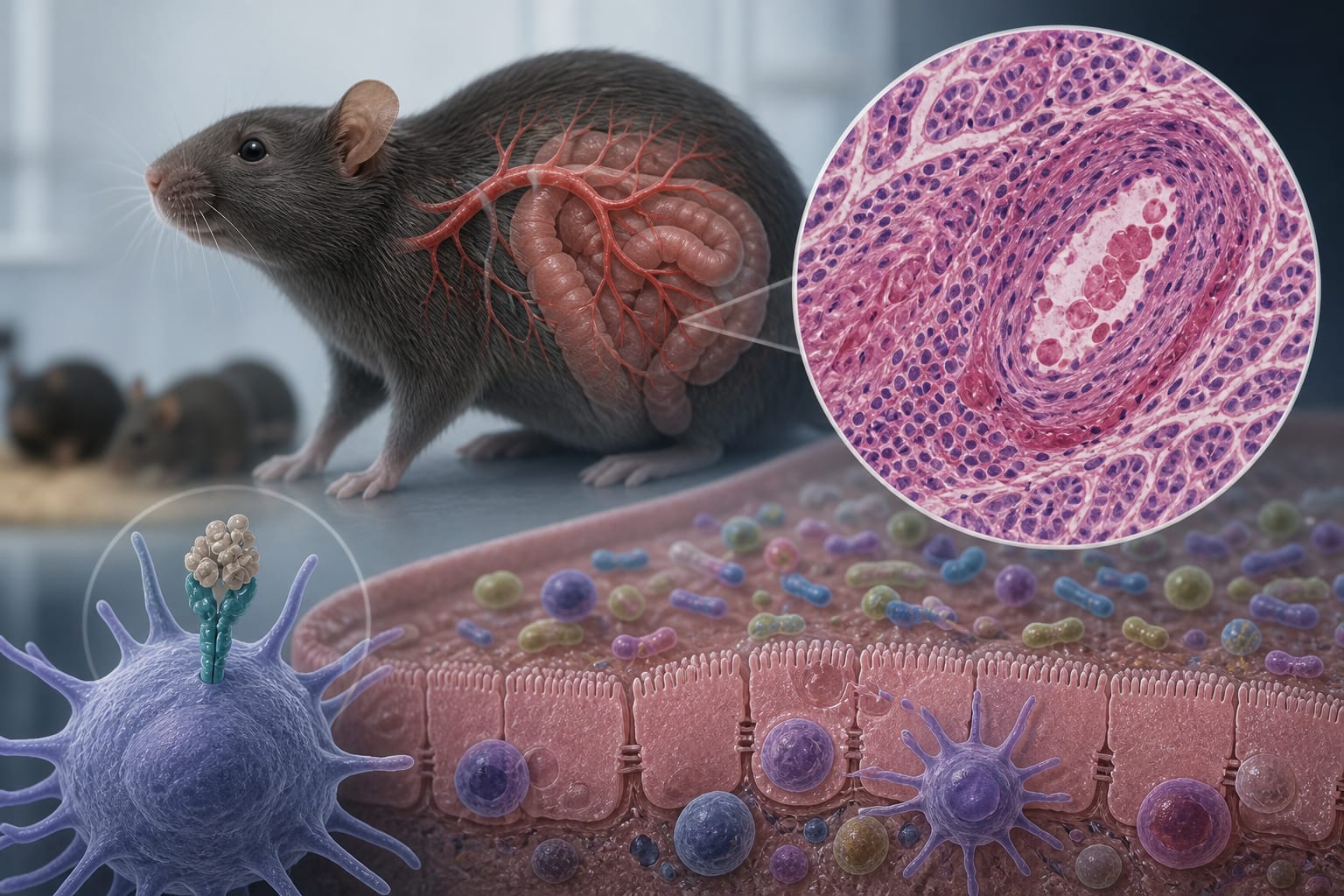
    The study developed a new mouse model for lupus mesenteric vasculitis (LMV) using BWF1 mice treated with the TLR7/8 agonist R848.

  • 2

    R848 treatment resulted in intestinal vasculitis, elevated serum autoantibody levels, and accelerated systemic lupus erythematosus (SLE) pathology.

  • 3

    The model revealed microbiota alterations and increased fecal propionic acid concentrations associated with LMV.

  • 4

    Broad-spectrum antibiotics tended to suppress LMV pathology during the early induction phase in the mouse model.

  • 5

    The findings suggest a potential role for intestinal propionate in maintaining homeostasis in LMV, warranting further investigation.

Original Source(s)

Related Content