Gut microbiota and pediatric metabolic dysfunction–associated steatotic liver disease: clinical evidence and therapeutic implications - Takeaways - MDSpire

Gut microbiota and pediatric metabolic dysfunction–associated steatotic liver disease: clinical evidence and therapeutic implications

  • By

  • Bhagyalakshmi Nair

  • Adithya Jayaprakash Kamath

  • Aswathy R. Devan

  • Rajesh Gopalakrishna

  • Ashok R. Unni

  • Lekshmi R. Nath

  • May 13, 2026

  • 0 min

Share

  • 1

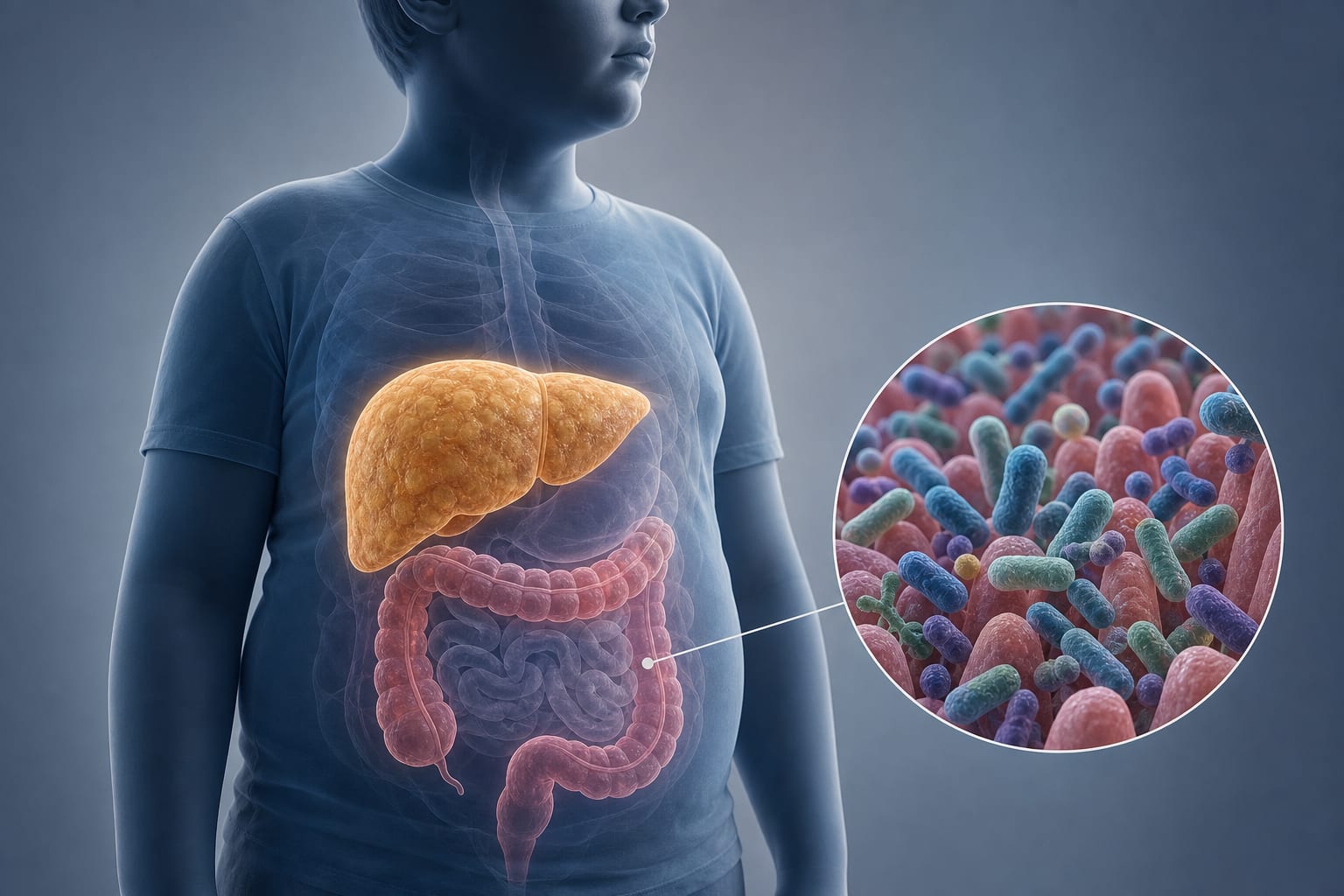
    Metabolic dysfunction-associated steatotic liver disease (MASLD) is a prevalent chronic liver condition linked to obesity and metabolic syndrome in children.

  • 2

    The prevalence of MASLD in the pediatric population is approximately 14%, rising to 38% among obese children, highlighting a significant health concern.

  • 3

    Obesity is a primary risk factor for MASLD, but the condition can also occur in non-obese individuals, indicating a complex etiology.

  • 4

    Gut microbiota composition is influenced by diet, with differences observed between populations, potentially impacting the progression of MASLD.

  • 5

    Recent updates in terminology from NAFLD to MASLD reflect a better understanding of the disease's pathogenesis and its association with metabolic dysfunction.

Original Source(s)

Related Content