Macrophage metabolic reprogramming in sepsis-associated acute lung injury: mechanisms and therapeutic strategies - Takeaways - MDSpire

Macrophage metabolic reprogramming in sepsis-associated acute lung injury: mechanisms and therapeutic strategies

  • By

  • Ran Pan

  • Yiyi Sun

  • Lu Chen

  • Jianping Pan

  • Junping Guo

  • May 15, 2026

  • 0 min

Share

  • 1

    Sepsis-associated acute lung injury (S-ALI) has high mortality rates and limited treatment options, contributing significantly to patient morbidity.

  • 2

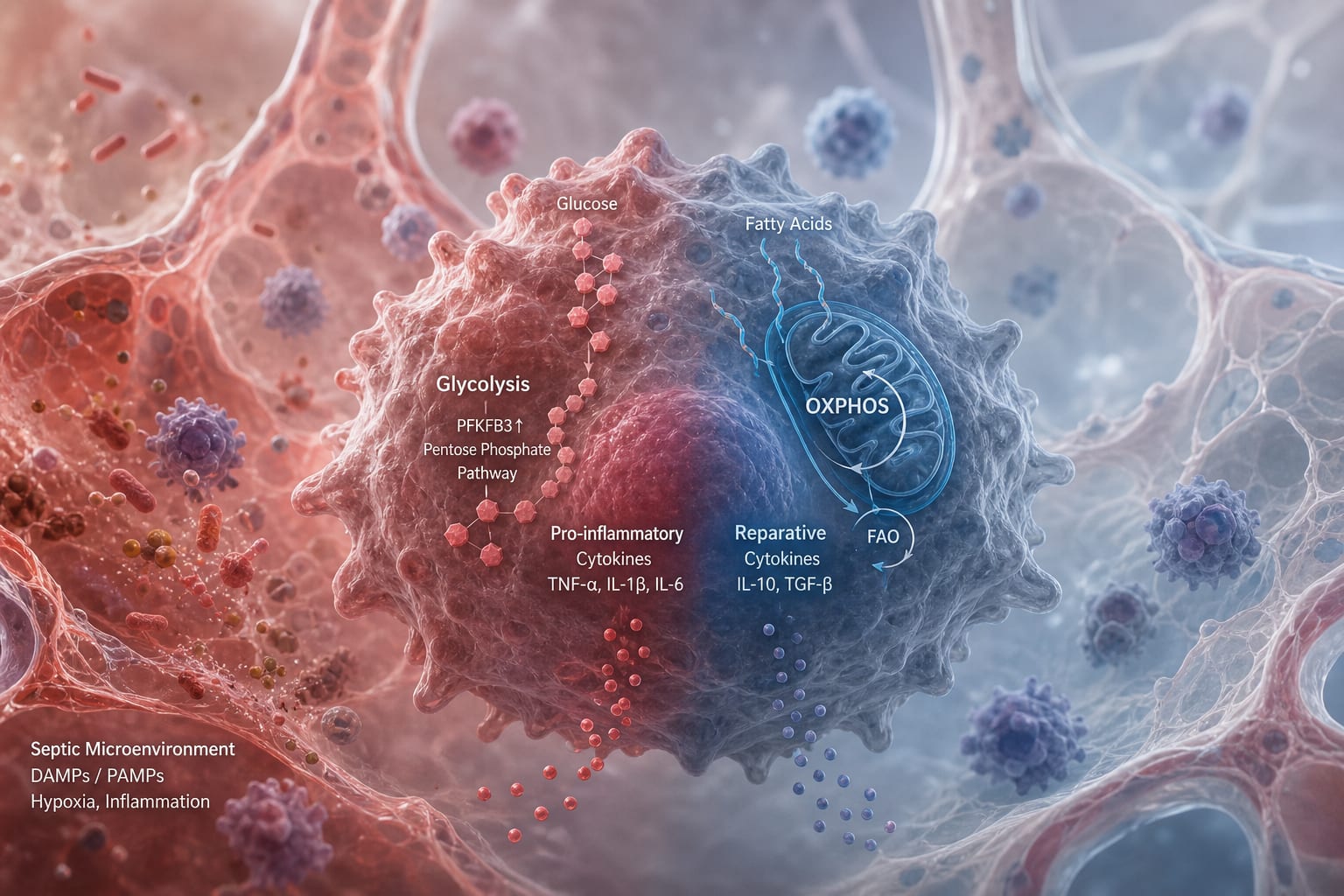
    Macrophages exhibit functional plasticity and metabolic reprogramming, influencing their roles in inflammation and tissue repair during S-ALI.

  • 3

    Pro-inflammatory macrophages utilize aerobic glycolysis, while reparative macrophages rely on oxidative phosphorylation and fatty acid oxidation.

  • 4

    Dynamic shifts in macrophage metabolism occur during S-ALI, with an early hyperinflammatory phase and a later immunosuppressive phase.

  • 5

    Innovative therapeutic strategies, including nanotechnology, aim to reprogram macrophage metabolism to restore immune balance in S-ALI.

Original Source(s)

Related Content