Characterizing the impact of intracutaneous dissemination on host responses during Borrelia burgdorferi infection - Takeaways - MDSpire

Characterizing the impact of intracutaneous dissemination on host responses during Borrelia burgdorferi infection

  • By

  • Samantha Crane

  • Amira-Nuriya McKinney

  • Clayton Jarrett

  • Chad S. Clancy

  • Olof Rickard Nilsson

  • Kelly L. Hawley

  • Ashley M. Groshong

  • June 5, 2026

  • 0 min

Share

  • 1

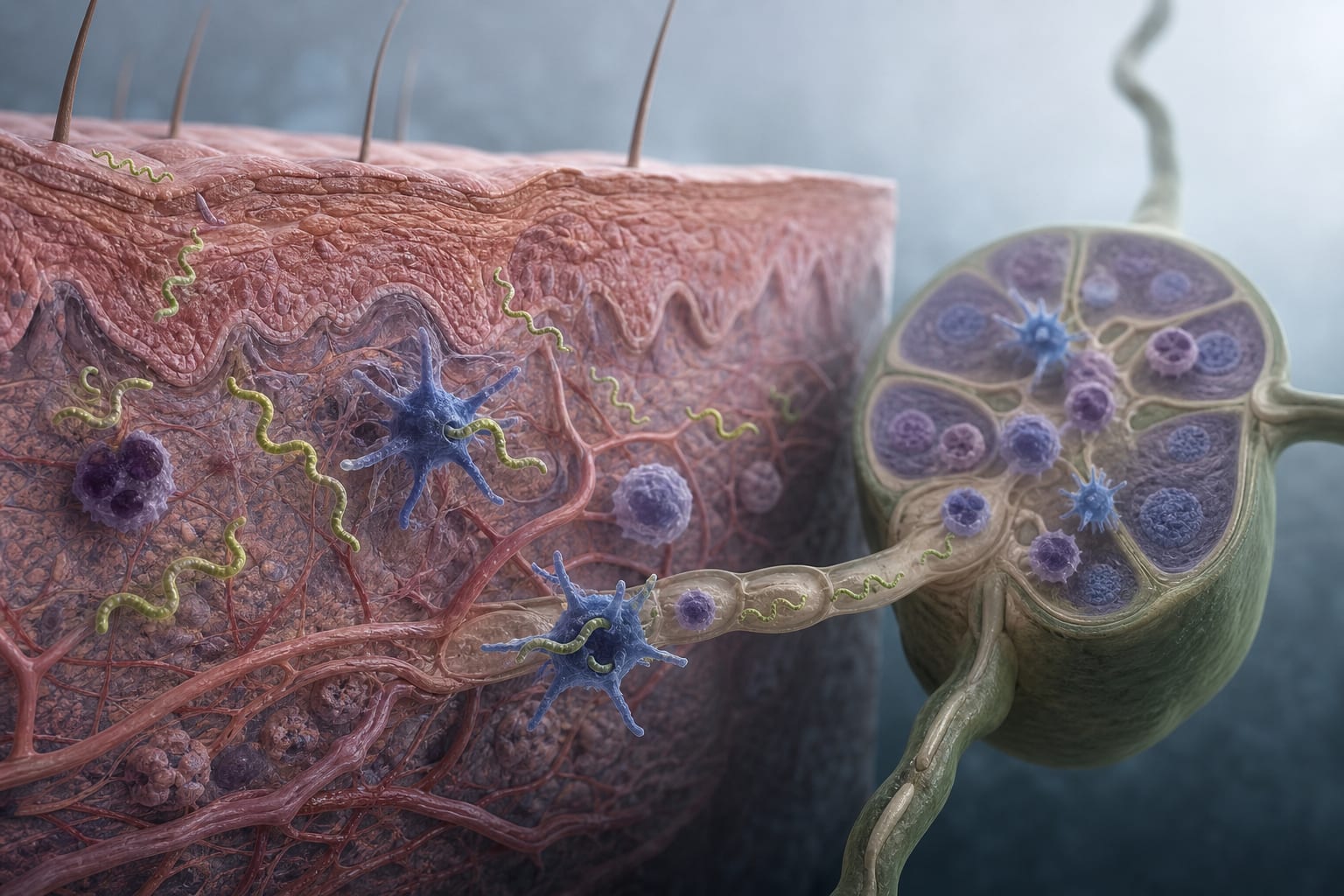
    The oppA2tn mutant of Borrelia burgdorferi shows restricted intracutaneous dissemination and reduced hematogenous spread during infection.

  • 2

    At 4 weeks post-inoculation, the oppA2tn mutant colonizes lymph nodes, indicating lymphatic dissemination may lead to organ colonization.

  • 3

    The oppA2tn mutant infection results in significantly dampened antibody responses compared to wild-type infections.

  • 4

    MyD88 signaling and the adaptive immune system play crucial roles in controlling spirochete dissemination in the skin.

  • 5

    The study highlights the importance of hematogenous dissemination in generating a robust immune response against Borrelia burgdorferi.

Original Source(s)

Related Content