A novel ventricular septal reconstruction device for post-myocardial infarction ventricular septal rupture: preclinical and first-in-human study results - Takeaways - MDSpire
Coming Soon: Introducing MDSpire News. Learn more
Conexiant’s news site is now MDSpire News. Learn more

Innovative Device for Ventricular Septal Reconstruction Following Post-Myocardial Infarction Rupture: Findings from Preclinical and Initial Human Trials

  • By

  • Changjing Huang

  • Nan Cai

  • Youqian Li

  • Yao Yao

  • Zexun Zhu

  • Weike Wu

  • Kaibing Ren

  • Siwei Wu

  • Jingfeng Liu

  • Jingyuan Hou

  • Haifeng Hong

  • Hanlin Li

  • Zhihui Hu

  • Zhixiong Zhong

  • Wei Zhong

  • September 9, 2026

Share

  • 1

    Post-myocardial infarction ventricular septal rupture (PIVSR) has a poor prognosis, with survival rates of 6% at 1 month and below 3% at 1 year with pharmacological therapy.

  • 2

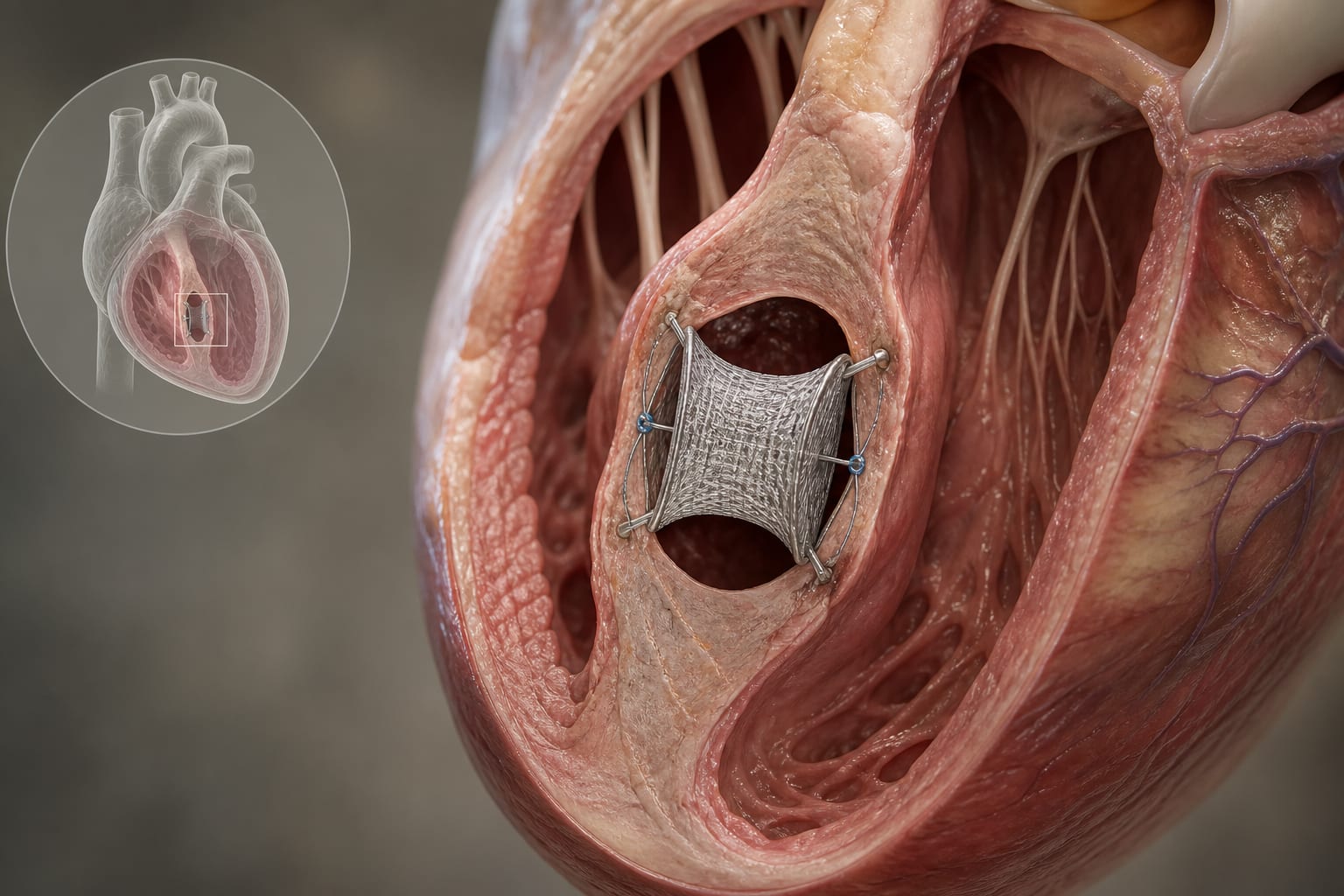
    The Ventricular Septal Reconstruction Device (VSRD) was developed specifically for PIVSR and features a unique design to adapt to the pathological characteristics of the condition.

  • 3

    In preclinical trials, the VSRD was successfully implanted in 10 out of 11 animals, with no structural malfunction or delivery-system failure reported.

  • 4

    In the first-in-human study, all four patients had successful implantation of the VSRD, with residual shunts remaining ≤2 mm during follow-up.

  • 5

    The study concluded that the VSRD showed procedural feasibility and acceptable short-term safety, but larger studies are needed to assess long-term outcomes.

Original Source(s)

Related Content