Altered spontaneous brain activity and functional connectivity in persistent postural-perceptual dizziness - Takeaways - MDSpire

Altered spontaneous brain activity and functional connectivity in persistent postural-perceptual dizziness

  • By

  • Jinghan Qin

  • Weitao Wang

  • Liya Shen

  • Yaru Liu

  • Tiancan Jin

  • Juan Wang

  • Daopei Zhang

  • Huailiang Zhang

  • July 15, 2026

Share

  • 1

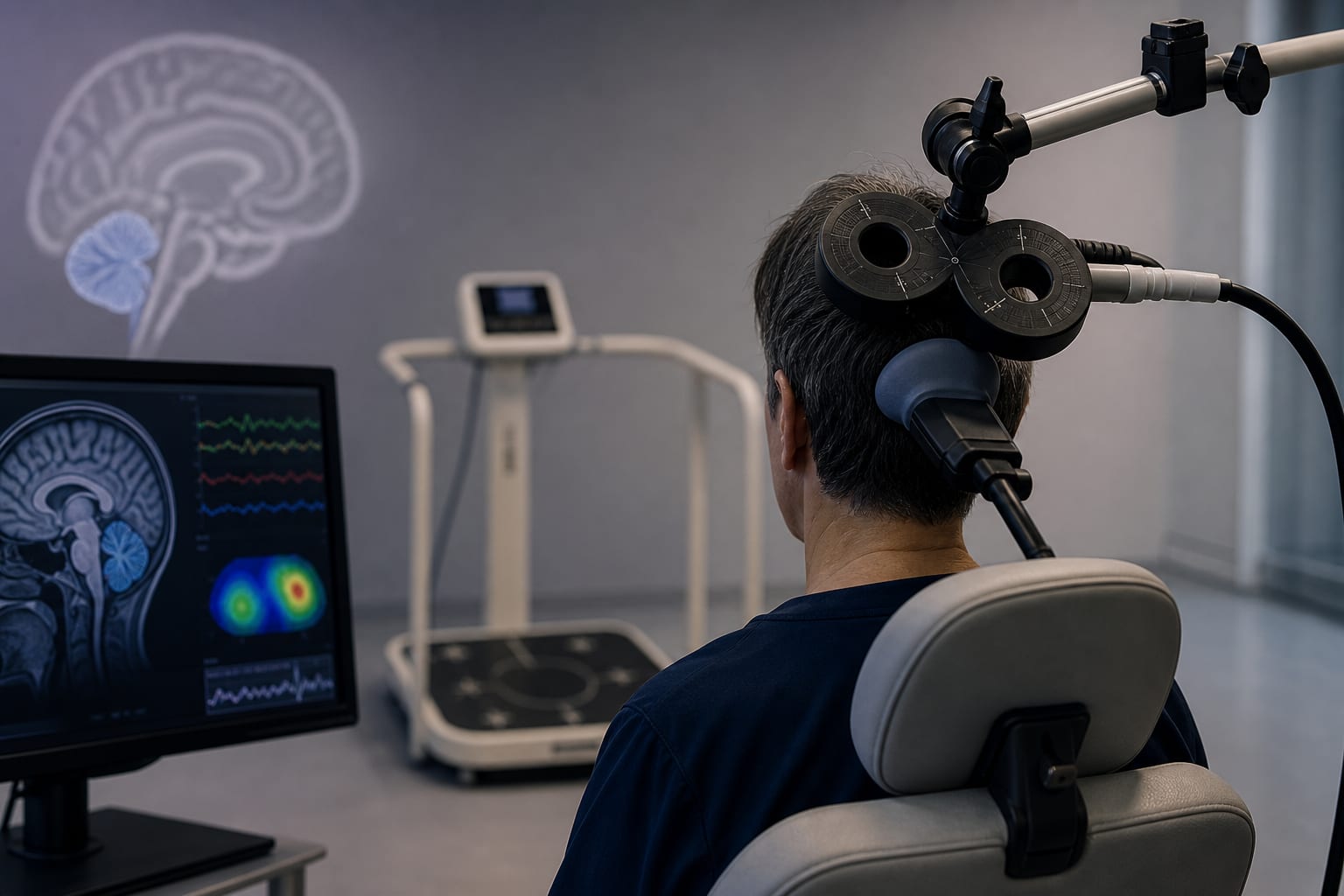
    Persistent postural-perceptual dizziness (PPPD) is characterized by chronic dizziness and postural instability exacerbated by upright posture and complex visual stimuli.

  • 2

    The study involved 21 PPPD patients and 23 healthy controls, utilizing 3.0 Tesla resting-state functional MRI to assess brain activity and connectivity.

  • 3

    Patients with PPPD exhibited altered brain activity in regions including the cerebellum, occipital and temporal cortices, and anterior cingulate cortex.

  • 4

    Functional connectivity analyses revealed abnormal connections among key brain regions, including the insula, caudate nucleus, and prefrontal cortex.

  • 5

    Clinical correlations indicated that disease duration, dizziness handicap, anxiety severity, and cognitive performance were linked to functional changes in specific brain regions.

Original Source(s)

Related Content