Balanced Component and Whole-Blood Transfusion Practices in US Trauma Centers - Takeaways - MDSpire
Coming Soon: Introducing MDSpire News. Learn more
Conexiant’s news site is now MDSpire News. Learn more

Transfusion Strategies for Components and Whole Blood in Trauma Centers Across the United States

  • By

  • Pawan Acharya

  • Russell Griffin

  • Molly P. Jarman

  • Chandler A. Annesi

  • Jan O. Jansen

  • Jeffrey D. Kerby

  • John B. Holcomb

  • Zain G. Hashmi

  • September 4, 2026

Share

  • 1

    Hemorrhage is a leading cause of preventable mortality in trauma, necessitating prompt and balanced resuscitation to improve outcomes.

  • 2

    Balanced component transfusion, using a 1:1:1 ratio of plasma, platelets, and red blood cells, is central to damage control resuscitation.

  • 3

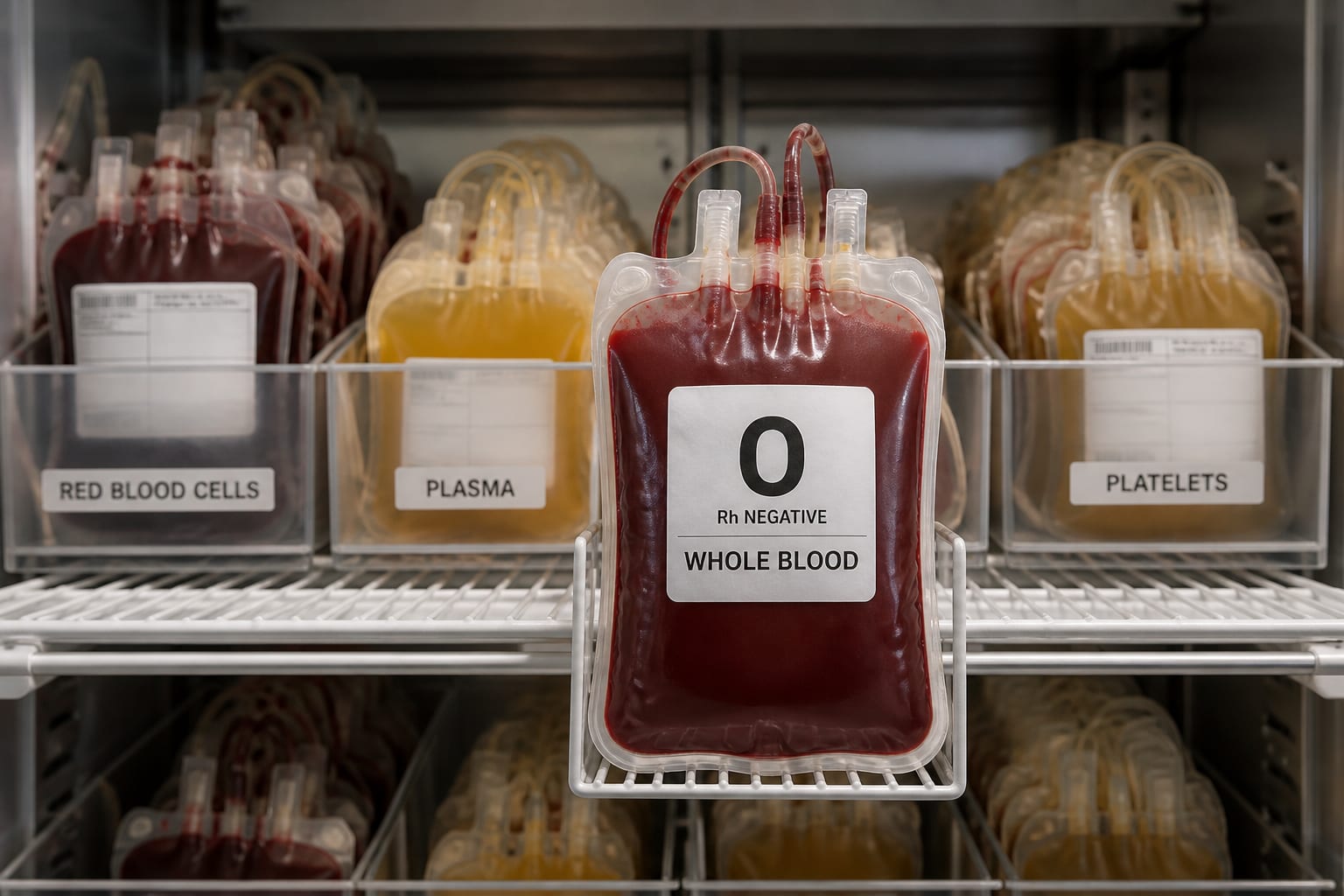
    Cold-stored, low-titer group O whole blood is gaining attention as an alternative to component-based transfusion due to its logistical advantages.

  • 4

    National implementation of balanced transfusion and whole blood programs in US trauma centers varies due to factors like infrastructure and regulatory oversight.

  • 5

    The study utilized the ACS Trauma Quality Improvement Program datasets to evaluate trends and factors influencing transfusion practices from 2018 to 2024.

Original Source(s)

Related Content