Machine learning-driven identification and immunohistochemical validation of an integrated immune-inflammatory phenotype for disease-free survival stratification in breast cancer - Takeaways - MDSpire

Machine learning-driven identification and immunohistochemical validation of an integrated immune-inflammatory phenotype for disease-free survival stratification in breast cancer

  • By

  • Shanshan Han

  • Lin Ran

  • Zhaoan Lian

  • Yong Tian

  • Li Qin

  • Yingchun Xiang

  • Xiaohao Yan

  • Chengyu Shui

  • Cheng Huang

  • June 18, 2026

  • 0 min

Share

  • 1

    The study analyzed 503 breast cancer patients to evaluate the impact of immune-related factors on disease-free survival (DFS).

  • 2

    An integrated immune phenotype was categorized as favorable, poor, or intermediate based on stromal tumor-infiltrating lymphocytes and systemic immune-inflammation index.

  • 3

    Random survival forest (RSF) outperformed other models, achieving the highest time-dependent AUC and lowest integrated Brier score for DFS prediction.

  • 4

    The poor integrated immune phenotype was independently associated with worse DFS, with a hazard ratio of 2.53 compared to the favorable phenotype.

  • 5

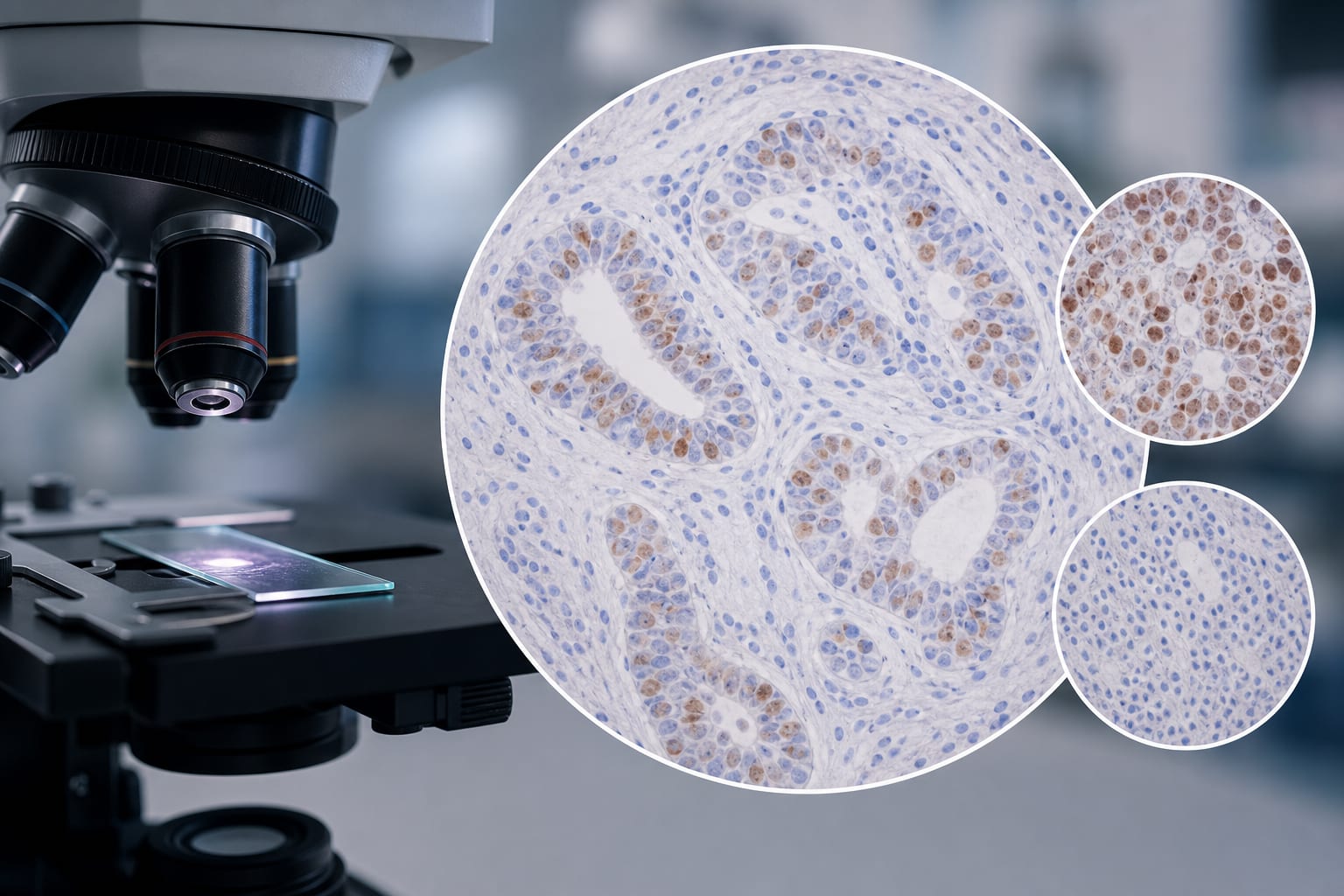
    Immunohistochemical validation showed distinct immune profiles, with higher CD8+ and lower CD163+ cell densities in the favorable phenotype.

Original Source(s)

Related Content