Type I interferon pathway activation in connective tissue disease associated interstitial lung disease - Takeaways - MDSpire

Type I interferon pathway activation in connective tissue disease associated interstitial lung disease

  • By

  • Tobias M. Defesche

  • Thomas Koudstaal

  • Marjan A. Versnel

  • Odilia B.J. Corneth

  • Zana Brkic

  • June 11, 2026

  • 0 min

Share

  • 1

    Interstitial lung disease (ILD) is prevalent in connective tissue diseases (CTDs) and accounts for 25-30% of all ILD cases.

  • 2

    Up to 40% of ILDs are progressive, characterized by lung function decline and increased symptoms despite standard immunosuppressive therapy.

  • 3

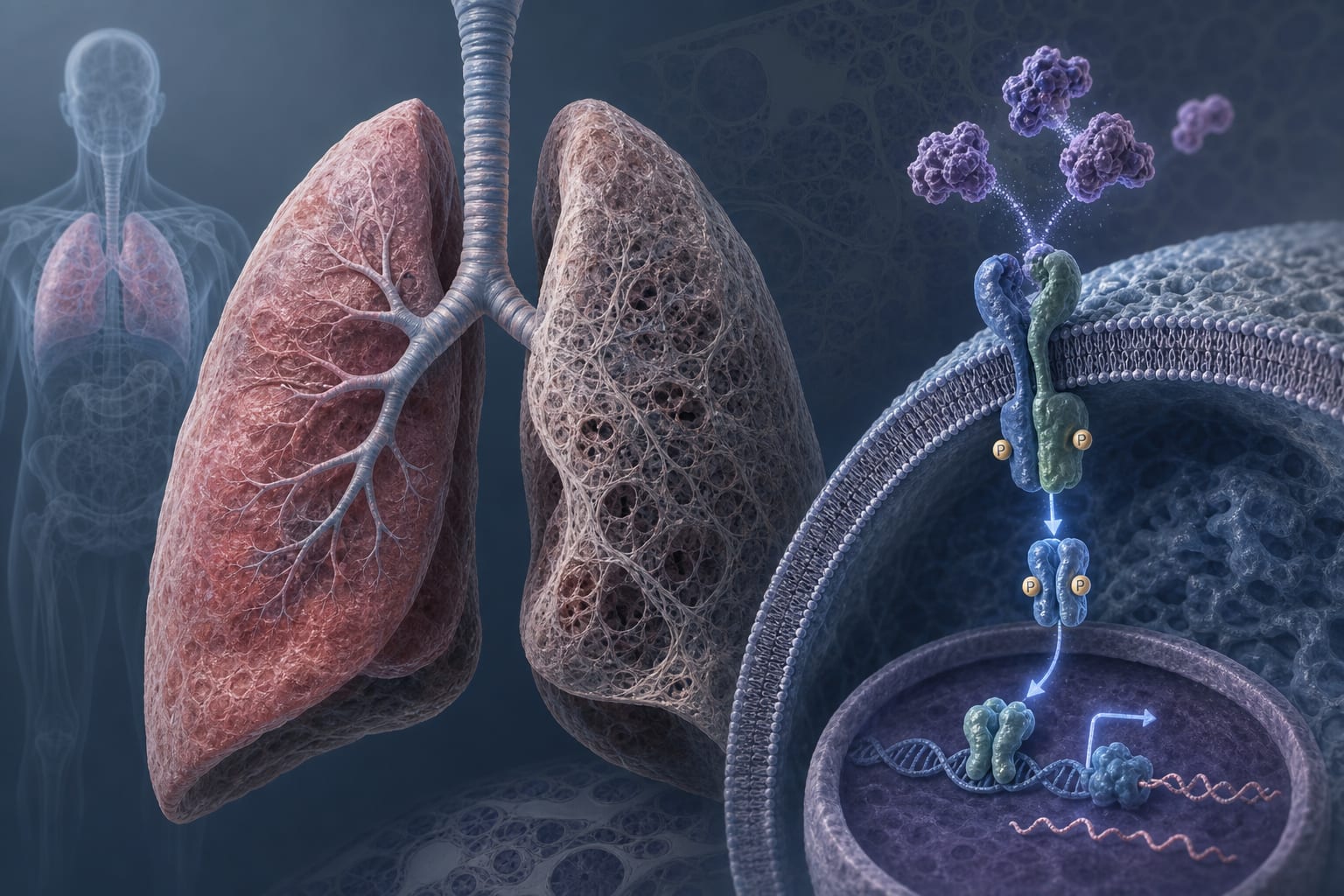
    Type I interferon (IFN-I) signaling is implicated in the pathophysiology of CTD-ILD, correlating with accelerated pulmonary decline.

  • 4

    Anifrolumab, an anti-IFNAR monoclonal antibody, is under clinical investigation for its potential in treating CTD-ILD.

  • 5

    Current treatment strategies for CTD-ILD include immunosuppression and antifibrotics, but many patients continue to progress.

Original Source(s)

Related Content