-
1
Post-stroke dysphagia affects 8.1% to 80% of stroke patients, leading to complications like dehydration and aspiration pneumonia. **Takeaway:** Early identification and management of dysphagia in stroke patients are crucial to prevent serious complications.
-
2
Current dysphagia assessment methods, including bedside assessments and VFSS, have limitations such as invasiveness and subjective interpretation.
-
3
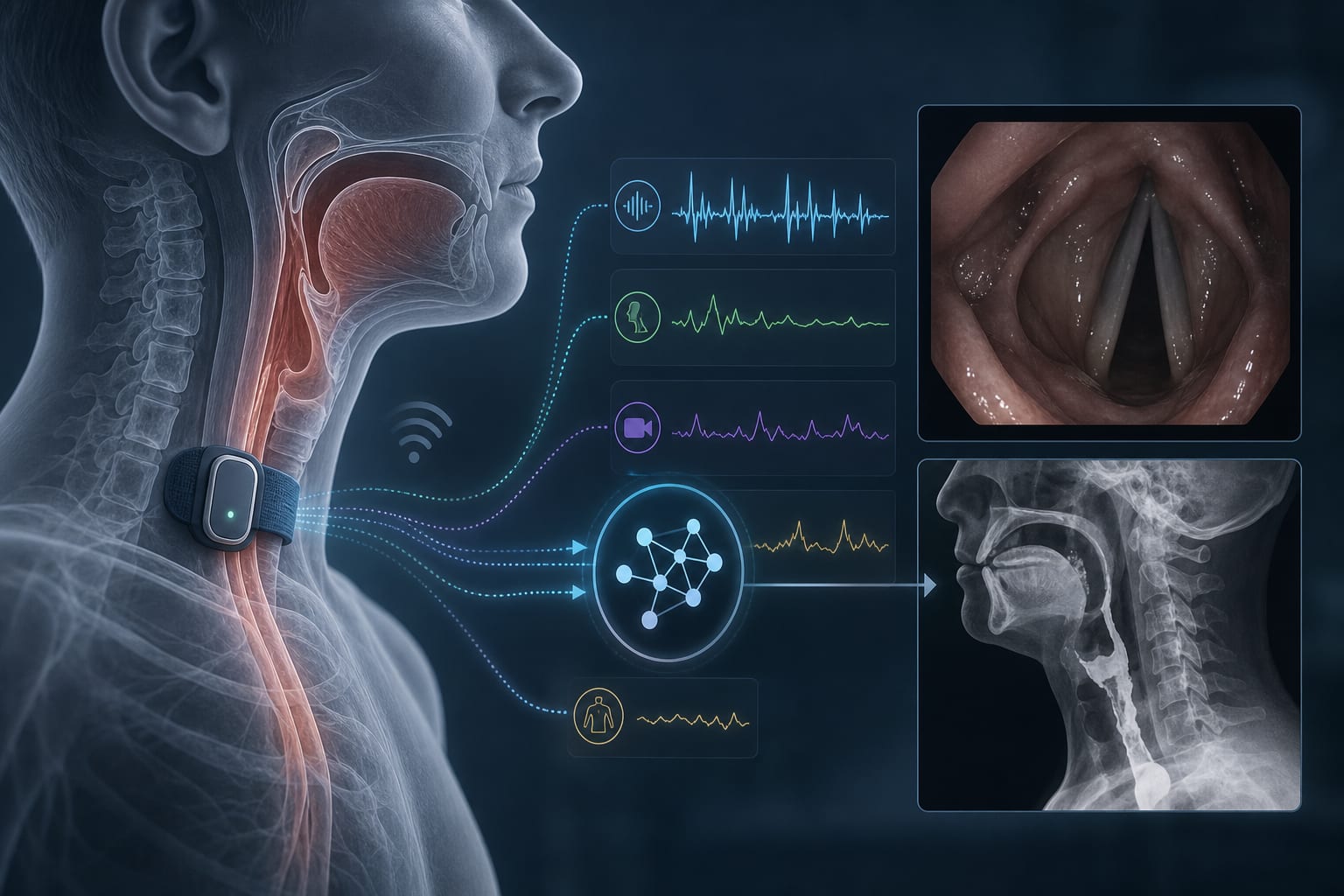
Multi-sensor systems combining nasal airflow, acceleration, and sound signals may improve dysphagia detection compared to single-sensor methods.
-
4
The study focused on 108 healthy adults and 108 stroke patients to evaluate the effectiveness of a multi-sensor system for dysphagia assessment.
-
5
Ethical approval was obtained for the study, which adhered to the principles of the Declaration of Helsinki and involved informed consent from participants.
-
6
The study concluded that the multi-sensor system significantly enhanced the accuracy of dysphagia detection in stroke patients compared to traditional assessment methods.
---