Transfusion Practices for Children in Germany, Austria, and Switzerland - Takeaways - MDSpire
Coming Soon: Introducing MDSpire News. Learn more
Conexiant’s news site is now MDSpire News. Learn more

Pediatric Transfusion Practices in Germany, Austria, and Switzerland

  • By

  • Eva Wittenmeier

  • Katharina Roehrs

  • Eva Herrmann

  • Johanna H. Steinberg

  • Christiane E. Beck

  • Andrea U. Steinbicker

  • TRAPA investigator study group

  • Hannah-Sophie Arbeiter

  • Gregor Badelt

  • Karin Becke-Jakob

  • Nicole Bewersdorf

  • Carolin Böhne

  • Patrick Booms

  • Jens Brands

  • Thorsten Brenner

  • Luisa Cremers

  • Nora Doberschütz

  • Christoph Eich

  • Dania Fischer

  • Thomas Fischer

  • Peter J Follmann

  • Ulrich Gosch

  • Ulrike Herberg

  • Egbert Hüttemann

  • Martin Keller

  • Isabel Kiesewetter

  • Dieter Klarmann

  • Maren Kleine-Brueggeney

  • Svea Kleiner

  • Markus Knuf

  • Oliver Kunitz

  • Karsten Laabs

  • Matthias Lange

  • Thomas Lehrnbecher

  • Anna Katharina Masseli

  • Chris Mohrmann

  • Marcus Nemeth

  • Kornelius Padberg

  • Tobias Piegeler

  • Florian Piekarski

  • Greta A. Polley

  • Vanessa Rigterink

  • Ulrich Rochwalsky

  • Udo Rolle

  • Armin Sablewski

  • Ehrenfried Schindler

  • Miriam Schneider

  • Antje Seidel

  • Benjamin Siebald

  • Barbara Sinner

  • Ezgi Sönmez

  • Alexander Sterlin

  • Andrea Uebler

  • Reiner M. Waeschle

  • Carola Wempe

  • Astrid Wintering

  • Kai Zacharowski

  • Bernhard Ziegler

  • November 20, 2026

Share

  • 1

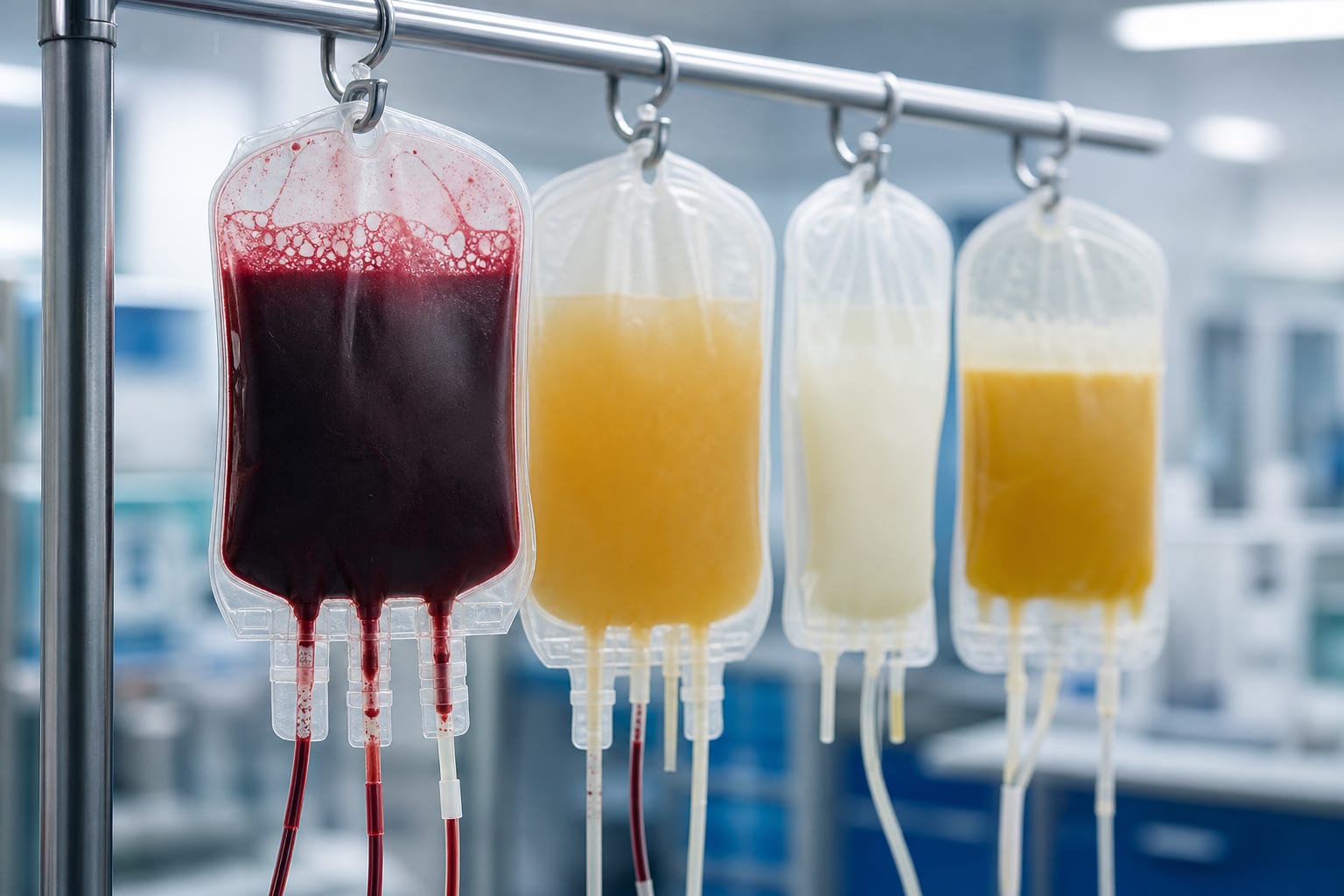
    The prospective TRAPA study recorded 1330 transfusion events involving 1834 blood products in children aged 0 days to 17 years across Germany, Austria, and Switzerland.

  • 2

    Nonoperative care accounted for 56.5% of transfusion events, and RBCs and platelets were most often transfused in that setting.

  • 3

    More than three-quarters of events involved a single product; isolated RBC transfusions accounted for 45.7% and isolated platelet transfusions for 22.6%.

  • 4

    Half of transfused children were clinically unstable; bleeding was documented in 14.4% of events and impaired coagulation in 22.2%.

  • 5

    Anonymous voluntary reporting prevented center comparisons and longitudinal tracking, while variable case numbers and missing data may limit generalizability.

Original Source(s)

Related Content