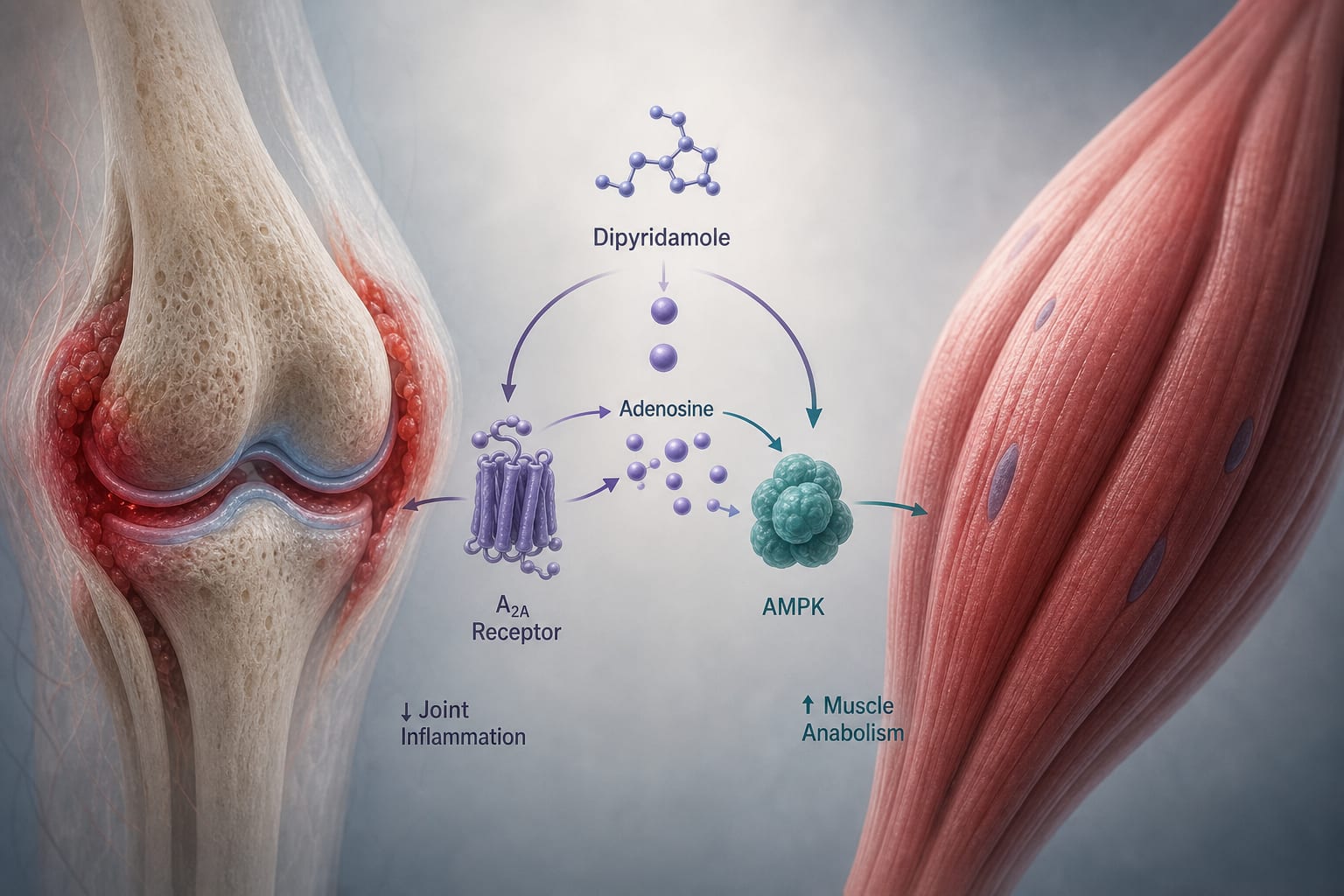
Dual Action of Dipyridamole in Experimental Rheumatoid Arthritis: Suppression of Joint Inflammation and Upregulation of Muscle Anabolism via Adenosine and AMPK Pathways - Takeaways - MDSpire

Biphasic Effects of Dipyridamole in Experimental Models of Rheumatoid Arthritis: Inhibition of Joint Inflammation and Enhancement of Muscle Anabolism through Adenosine and AMPK Signaling Pathways

  • By

  • Miguel Marco-Bonilla

  • Maria Fresnadillo

  • Irene Sanchez-Platero

  • Macarena de la Riva-Bueno

  • Fernando Huete-Toral

  • Gonzalo Carracedo

  • Carmen Conde

  • Yolanda Benitez

  • Pablo Minguez

  • Sandra Carolina Cifuentes

  • Joaquin Rams

  • Gabriel Herrero-Beaumont

  • Raquel Largo

  • Aránzazu Mediero

  • July 1, 2026

Share

  • 1

    Rheumatoid arthritis (RA) is a chronic autoimmune disease that leads to joint inflammation and can cause muscle atrophy and changes in body composition.

  • 2

    Muscle loss in RA, termed rheumatoid sarcopenia, affects 20% to 44% of patients and is linked to increased inflammation and elevated catabolic processes.

  • 3

    Methotrexate and biologic DMARDs are ineffective in improving muscle condition in RA, indicating a need for alternative therapeutic strategies.

  • 4

    Dipyridamole increases extracellular adenosine levels, activating A2AR and A2BR, which may provide anti-inflammatory effects and support muscle health.

  • 5

    The study aims to explore the therapeutic potential of dipyridamole in RA and its role in modulating muscle pathology through purinergic signaling.

Original Source(s)

Related Content