Bone-Modifying Agents in Metastatic Castration-Resistant Prostate Cancer - Takeaways - MDSpire

Bone-Modifying Agents in Metastatic Castration-Resistant Prostate Cancer

  • By

  • Zeynep Irem Ozay

  • Yeonjung Jo

  • Georges Gebrael

  • Micah Ostrowski

  • Vinay Mathew Thomas

  • Haoran Li

  • Ryon P. Graf

  • Soumyajit Roy

  • Benjamin L. Maughan

  • Avirup Guha

  • Irbaz Bin Riaz

  • Emmanuel S. Antonarakis

  • Rana R. McKay

  • Neeraj Agarwal

  • Umang Swami

  • June 24, 2026

  • 0 min

Share

  • 1

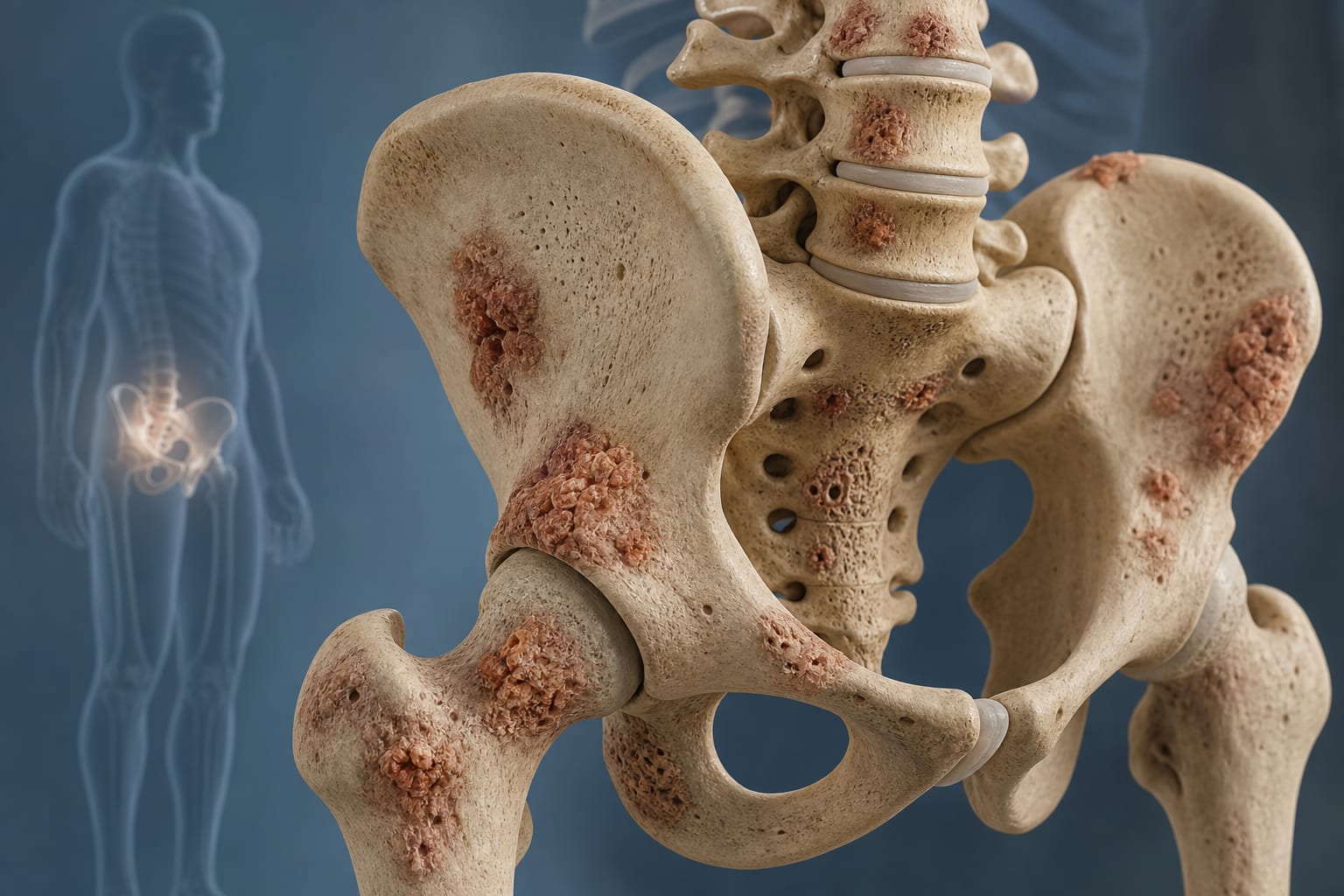
    Bone metastases affect over 90% of patients with metastatic castration-resistant prostate cancer (mCRPC) and increase the risk of skeletal-related events.

  • 2

    Bone-modifying agents (BMAs) like denosumab and zoledronic acid can reduce skeletal-related events in mCRPC, yet their use remains underreported.

  • 3

    In a cohort study of 14,076 mCRPC patients, 56.6% received BMAs, with a median time from diagnosis to initiation of 39 days.

  • 4

    BMA use decreased over time, with denosumab usage declining and zoledronic acid usage increasing from 2013 to 2024.

  • 5

    43.4% of patients in the study did not receive BMAs, indicating a gap between clinical guidelines and actual practice.

Original Source(s)

Related Content