Osteoimmuno-brain axis: a bridge connecting osteoporosis and cognitive decline and its clinical significance in dementia and Alzheimer’s disease - Takeaways - MDSpire

Osteoimmuno-brain axis: a bridge connecting osteoporosis and cognitive decline and its clinical significance in dementia and Alzheimer’s disease

  • By

  • Guang Xu

  • Zheng Cheng

  • Yali Zhou

  • Liang Guo

  • Huihua Zhu

  • Zuojia Shen

  • June 24, 2026

  • 0 min

Share

  • 1

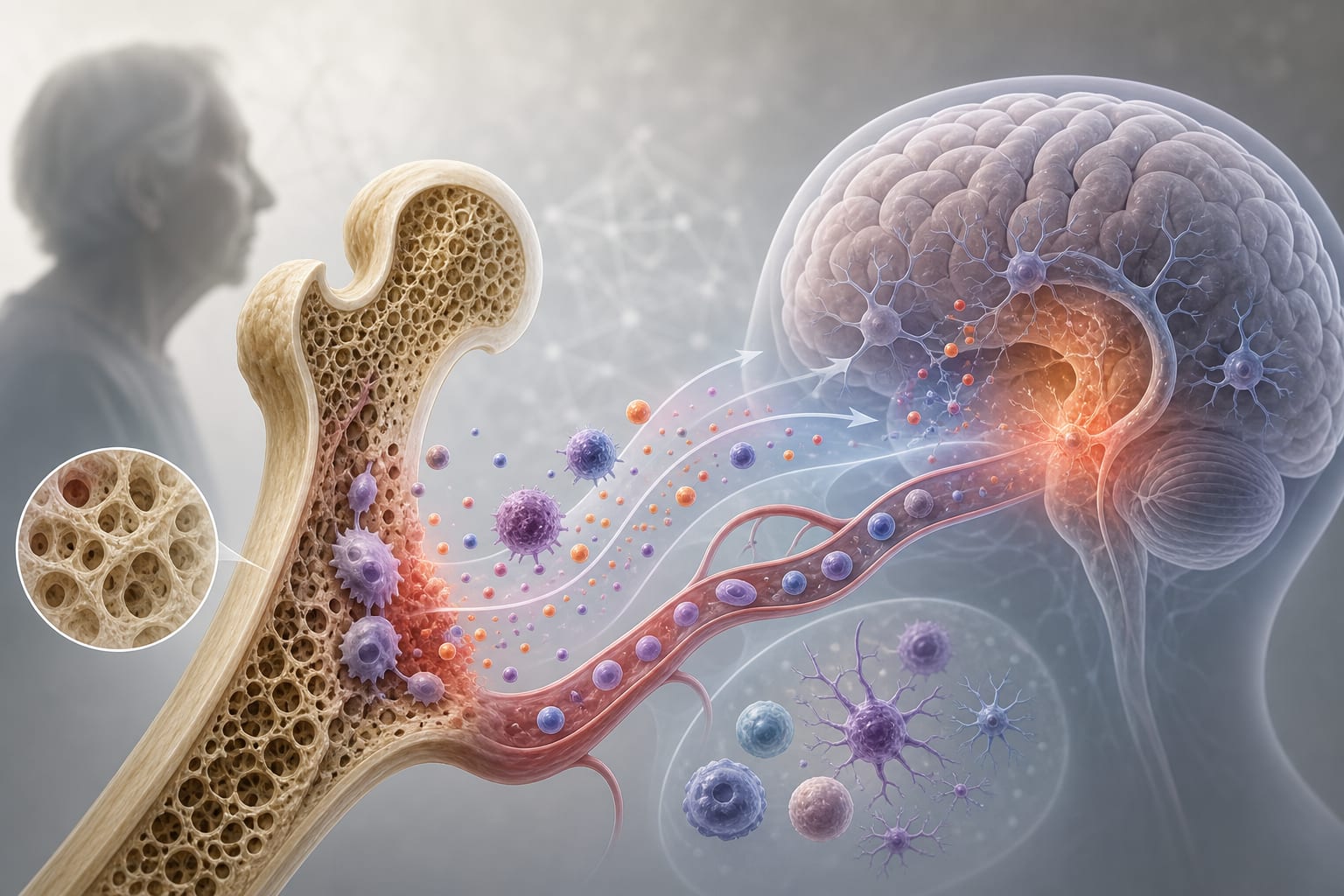
    Osteoporosis and Alzheimer's disease frequently co-occur in the elderly, indicating shared pathophysiological links.

  • 2

    The osteoimmune-brain axis highlights the immune system's role in connecting skeletal and cerebral pathology.

  • 3

    Bone-derived factors, such as osteocalcin and sclerostin, influence brain function and may contribute to Alzheimer's disease.

  • 4

    Chronic low-grade systemic inflammation is a common feature of aging that drives both bone resorption and neuroinflammation.

  • 5

    Hormonal dysregulation, particularly involving FSH, is implicated in both osteoporosis and Alzheimer's disease.

Original Source(s)

Related Content