The effect of surgical approach on opioid prescription rates for outpatient ventral hernia repair - Takeaways - MDSpire
Coming Soon: Introducing MDSpire News. Learn more
Conexiant’s news site is now MDSpire News. Learn more

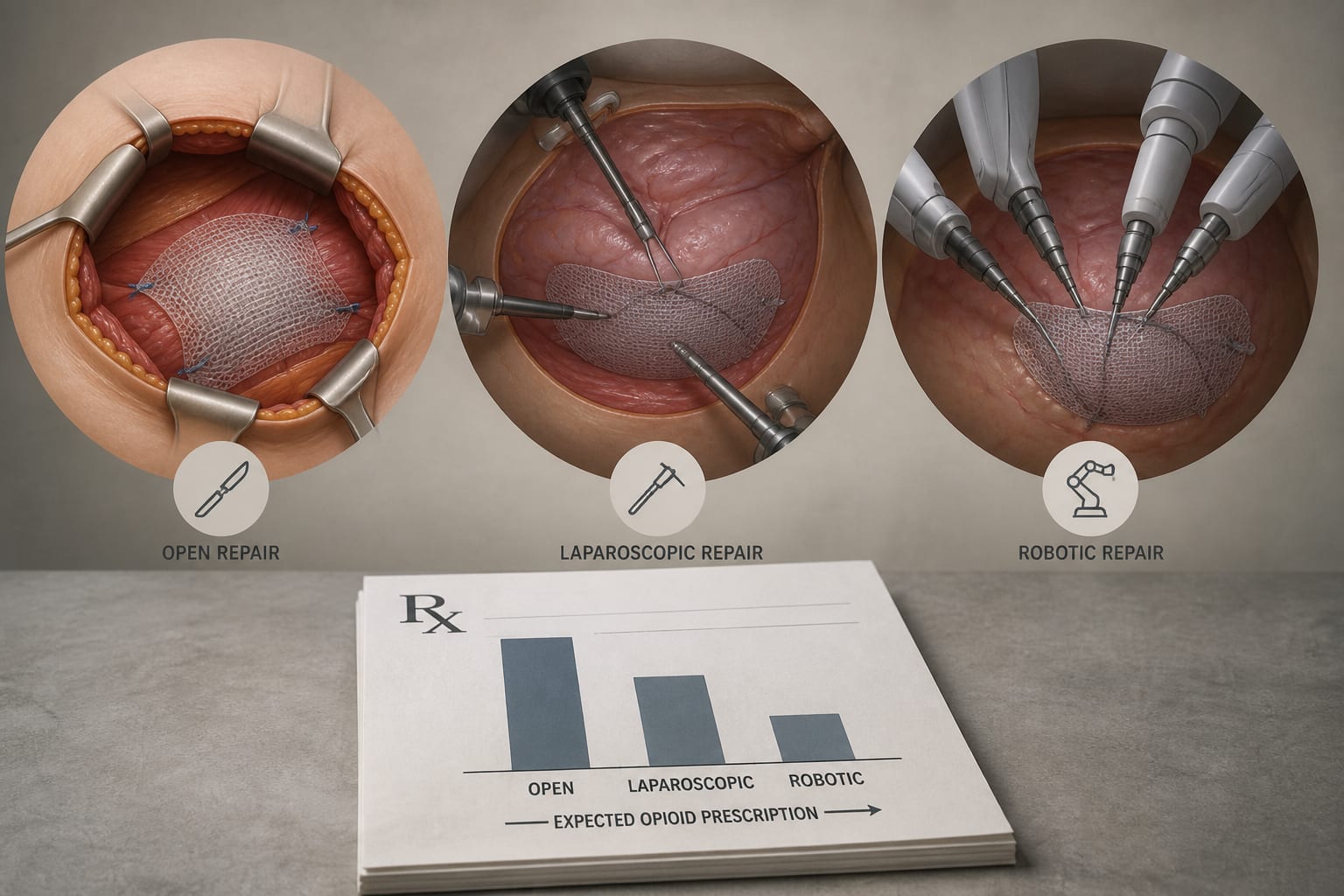
Impact of Surgical Technique on Opioid Prescription Patterns Following Outpatient Ventral Hernia Repair

  • By

  • John K. Ewing

  • Sullivan A. Ayuso

  • Gediwon Milky

  • Hannah Bossie

  • Heather Atchison

  • I-Fan Shih

  • B. Todd Heniford

  • August 28, 2026

Share

  • 1

    Prolonged opioid use after surgery can lead to serious adverse effects, with 1.7–6.5% of adults developing new persistent use postoperatively.

  • 2

    Over 610,000 ventral hernia repairs (VHRs) are performed annually in the U.S., with 67.4% occurring in outpatient settings.

  • 3

    Robotic-assisted ventral hernia repair (RVHR) has been linked to reduced long-term opioid use compared to laparoscopic or open repair.

  • 4

    The study utilized a large health insurance claims dataset to evaluate opioid prescription patterns following different VHR approaches.

  • 5

    Immediate opioid filling was assessed during postoperative days 0–14, with refilling during days 15–30 indicating extended postoperative pain.

Original Source(s)

Related Content