Comparative outcomes of transcranial craniotomy and endoscopic endonasal surgery for craniopharyngioma: a single-center retrospective cohort study - Takeaways - MDSpire

Comparative outcomes of transcranial craniotomy and endoscopic endonasal surgery for craniopharyngioma: a single-center retrospective cohort study

  • By

  • Lei Zhang

  • Ben Li Li

  • Shuo Wei

  • Fa An Miao

  • Hong Fu Chen

  • Yue Chao Fan

  • Pei Zhi Ji

  • Hui Zhang

  • June 24, 2026

  • 0 min

Share

  • 1

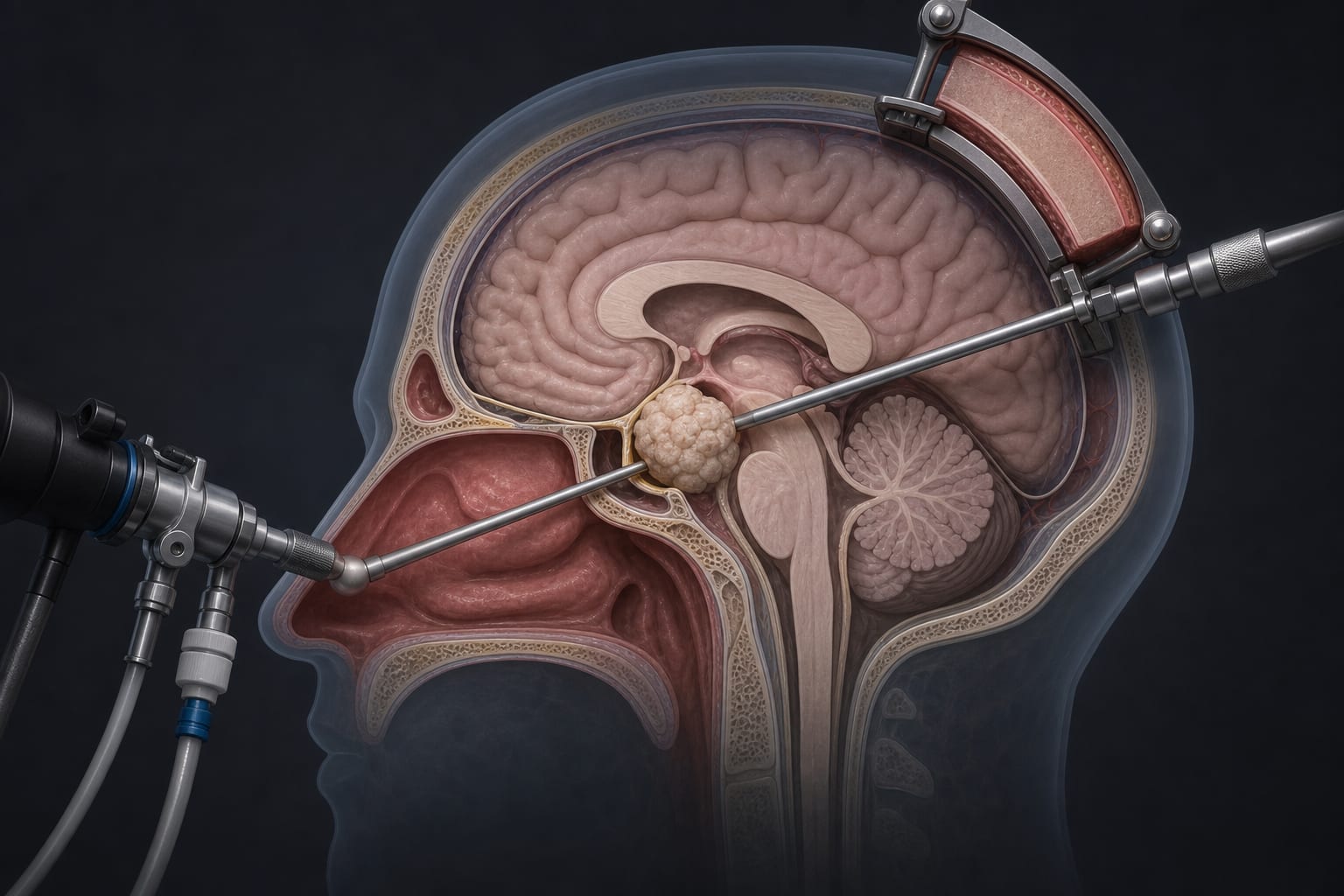
    Endoscopic endonasal approach (EEA) achieved a higher gross total resection rate compared to transcranial craniotomy (82.4% vs. 45.5%, p=0.002).

  • 2

    Patients undergoing EEA had a shorter hospital stay than those undergoing transcranial craniotomy (16.19 days vs. 18.76 days, p=0.019).

  • 3

    At 6 months, 90.9% of EEA patients experienced improvement in headache/ICP-related symptoms, compared to 76.5% of TCA patients (p=0.047).

  • 4

    EEA was associated with lower rates of endocrine complications, including new hypopituitarism (41.2% vs. 69.7%, p=0.022).

  • 5

    Recurrence/progression rates were lower in EEA patients (8.8%) compared to TCA patients (21.2%, p=0.047) at the last follow-up.

Original Source(s)

Related Content