Reduction of CXCR3+CCR6+ CD4+ T Cells and IL-17+ RORγt+ CD4+ T Cells During Secukinumab Treatment Identifies Patients With Axial Spondyloarthritis Responsive to Subsequent Biologic Therapy - Takeaways - MDSpire
Coming Soon: Introducing MDSpire News. Learn more
Conexiant’s news site is now MDSpire News. Learn more

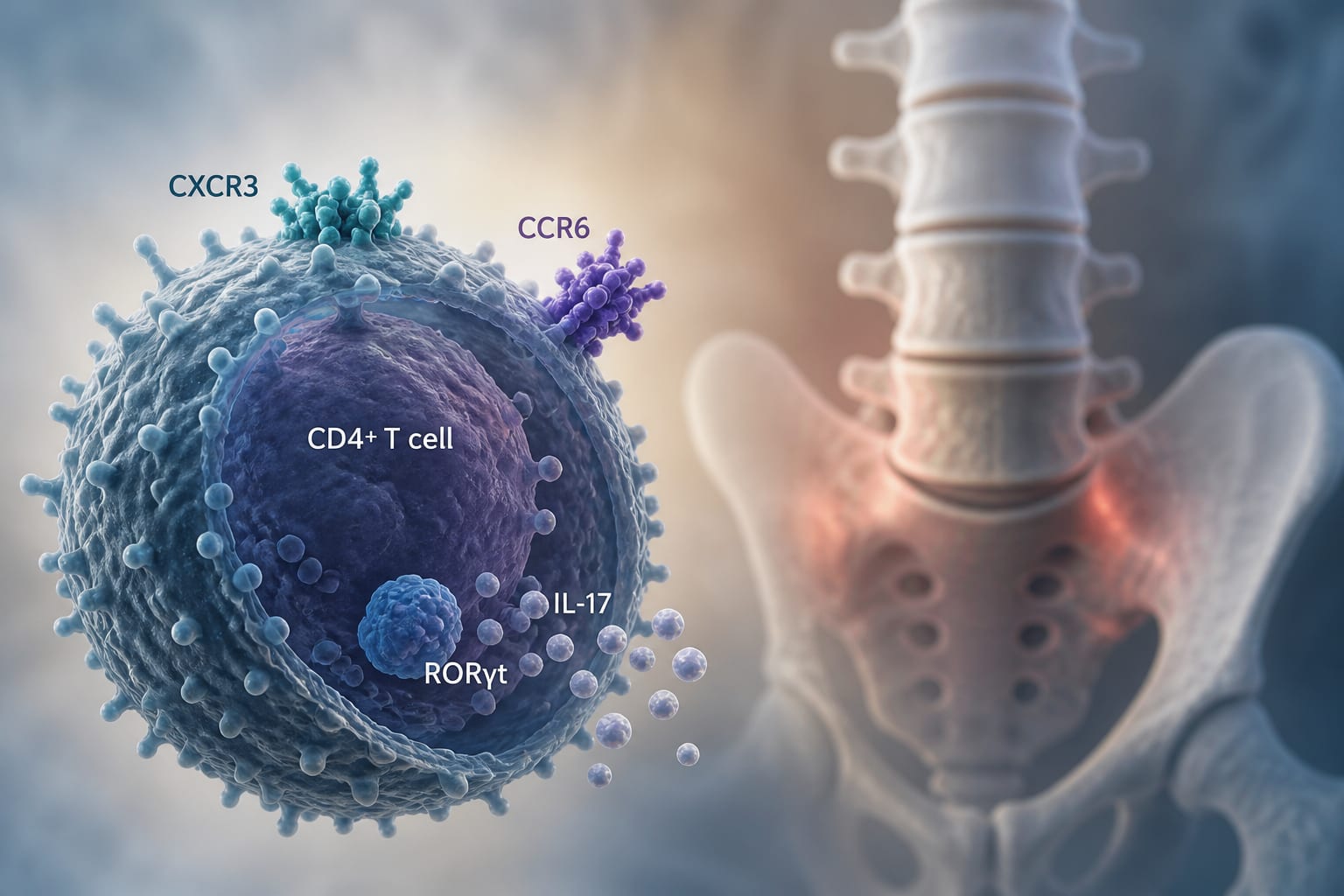
Decreased Levels of CXCR3+CCR6+ CD4+ T Cells and IL-17+ RORγt+ CD4+ T Cells During Secukinumab Therapy Correlate with Responsiveness to Subsequent Biologic Treatments in Axial Spondyloarthritis Patients

  • By

  • Addison Pacheco

  • Patricia Remalante-Rayco

  • Nigil Haroon

  • Denis Poddubnyy

  • Robert D. Inman

  • August 29, 2026

Share

  • 1

    Approximately 40% of axial spondyloarthritis patients fail to respond to biologic treatments, including TNFis and IL17is.

  • 2

    Increased type 1 interferon-regulated gene expression is observed in secukinumab nonresponders compared to responders.

  • 3

    The study analyzed patients who did not respond to secukinumab after failing TNFi to assess subsequent biologic treatment outcomes.

  • 4

    Peripheral blood mononuclear cells were isolated and analyzed to evaluate immunologic changes during biologic treatment.

  • 5

    Most patients ultimately respond to a third biologic treatment, regardless of the class of the biologic.

Original Source(s)

Related Content