Mechanopriming by vascular stiffness and phenotypic reprogramming by disturbed flow: mechanobiology and clinical translation in atherosclerosis - Takeaways - MDSpire

Mechanopriming by vascular stiffness and phenotypic reprogramming by disturbed flow: mechanobiology and clinical translation in atherosclerosis

  • By

  • Jin He

  • Jun Meng

  • June 24, 2026

  • 0 min

Share

  • 1

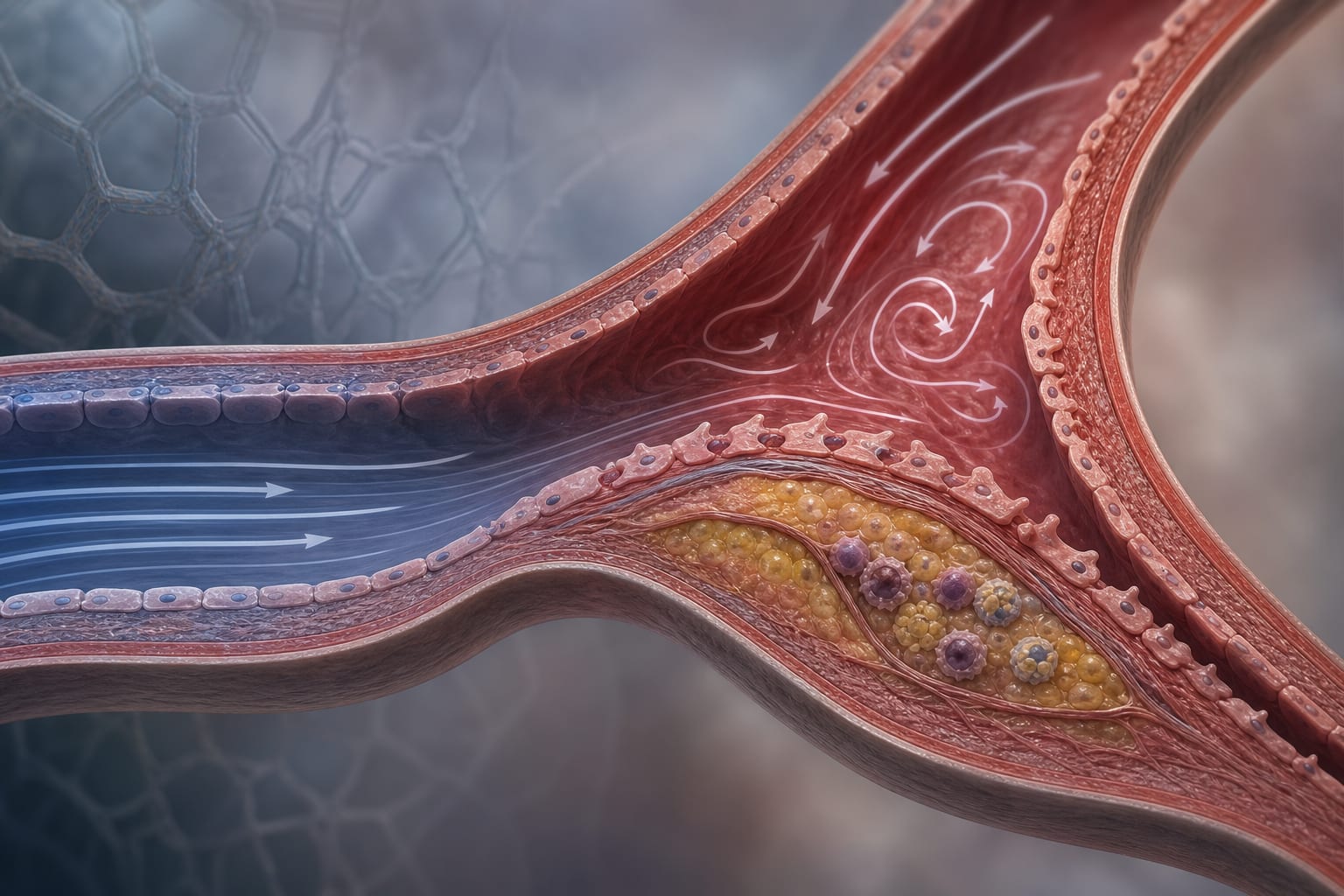
    Atherosclerosis exhibits a focal distribution at arterial bifurcations, indicating systemic risk factors alone do not fully explain its pathogenesis.

  • 2

    Disturbed flow and oscillatory shear stress are key mechanical drivers of site-specific plaque progression in atherosclerosis.

  • 3

    The Piezo1 ion channel and 5-HT1B receptor integrate fluid shear stress and matrix stiffness, activating central signaling hubs like YAP and c-REL.

  • 4

    Dysregulation of mechanopathways triggers pathological reprogramming of endothelial cells, including senescence and endothelial-to-mesenchymal transition.

  • 5

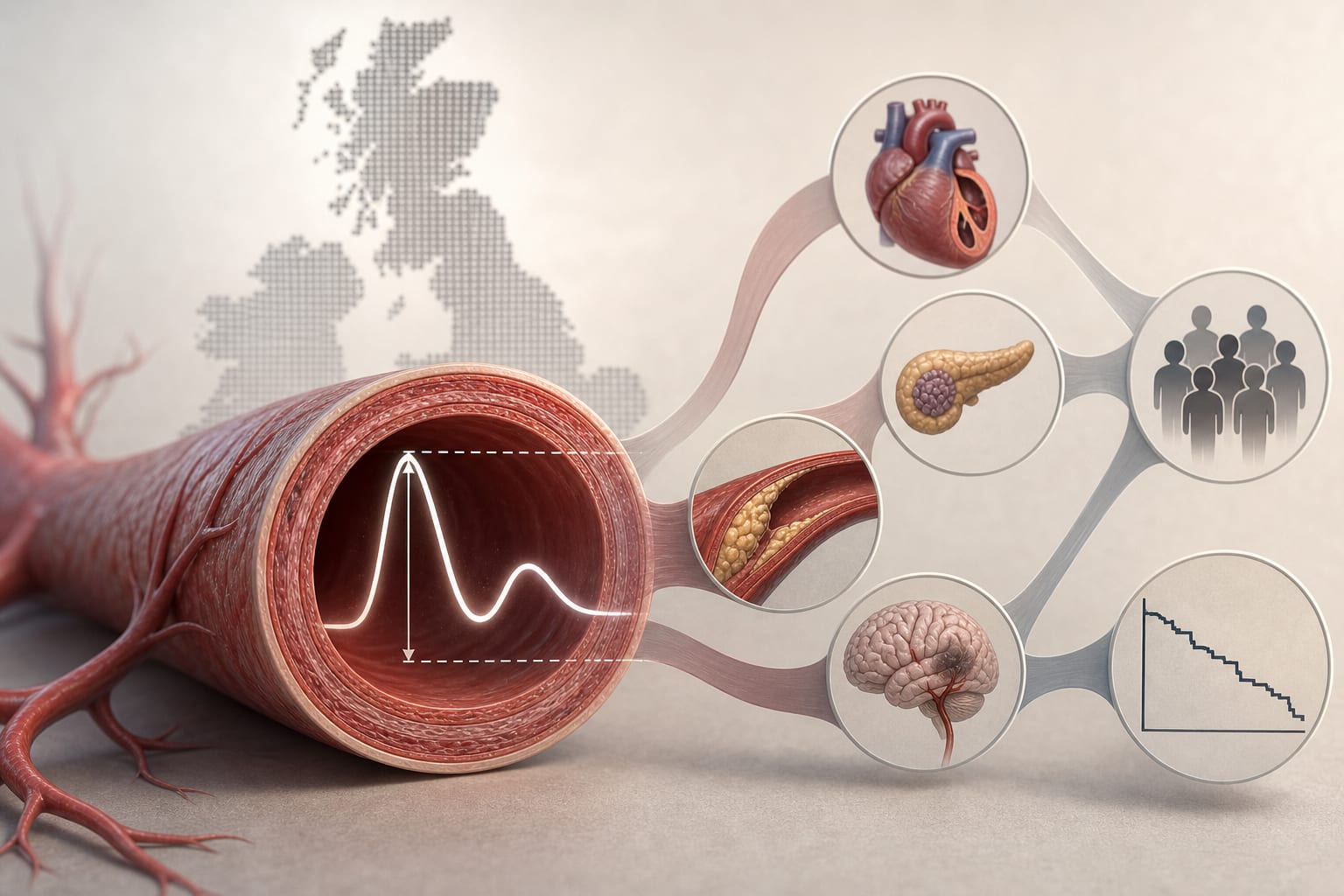
    Emerging imaging techniques and computational fluid dynamics enable high-fidelity in vivo quantification of wall shear stress in clinical settings.

Original Source(s)

Related Content