Research progress on addictive features and reward circuit mechanisms in non-suicidal self-injury and the feasibility of precision neuromodulation - Takeaways - MDSpire

Research progress on addictive features and reward circuit mechanisms in non-suicidal self-injury and the feasibility of precision neuromodulation

  • By

  • Jiao Li

  • Yan Zhang

  • Qiangli Dong

  • July 7, 2026

  • 0 min

Share

  • 1

    Non-Suicidal Self-Injury (NSSI) affects approximately 16.2% of adolescents globally, highlighting its significance as a public health issue.

  • 2

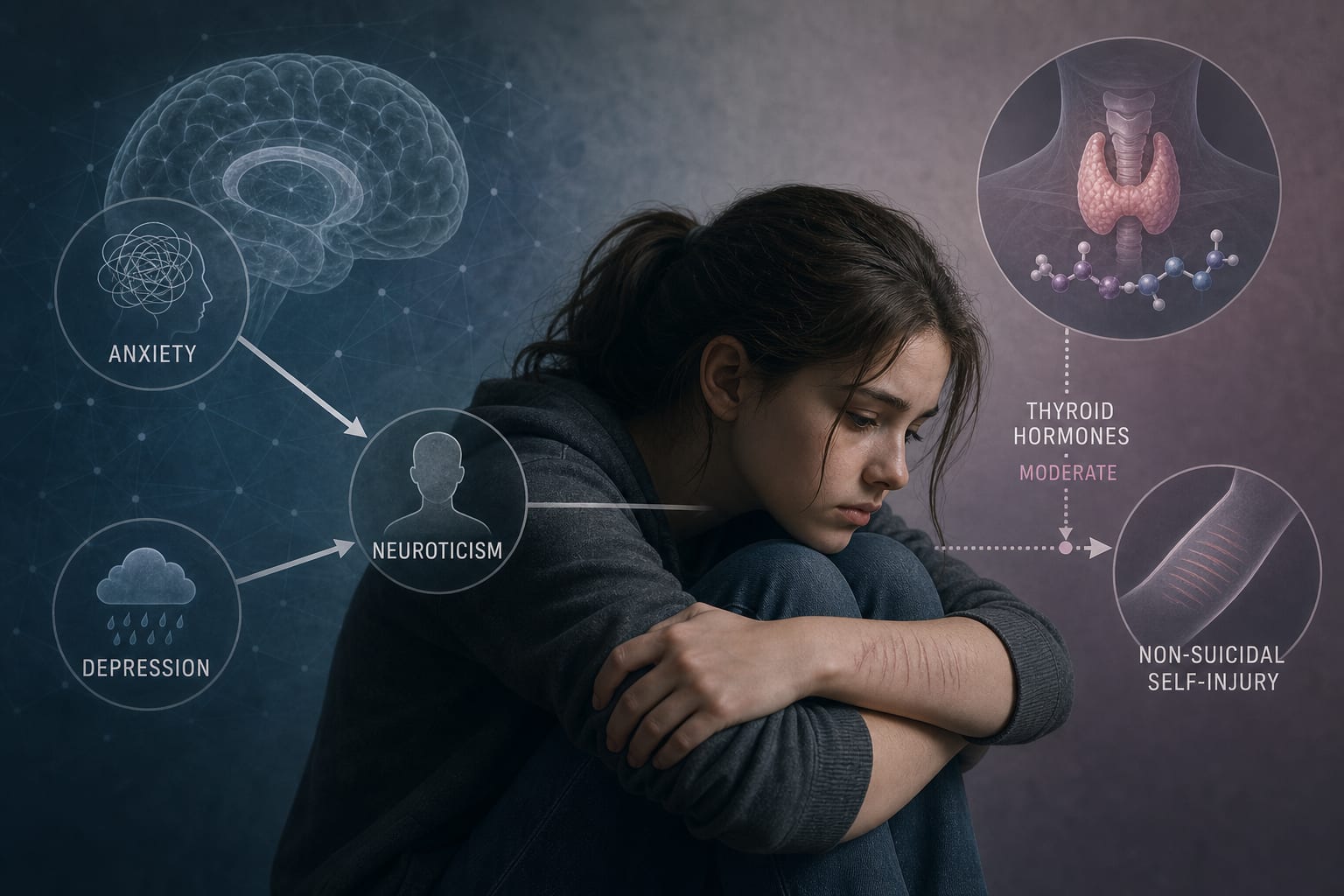
    NSSI exhibits addictive features, including compulsive urges and tolerance, driven by dysfunctions in the brain's reward circuitry.

  • 3

    The ventral striatum and prefrontal cortex are identified as key areas involved in the dysregulation associated with NSSI.

  • 4

    Stanford Accelerated Intelligent Neuromodulation Therapy (SAINT) is proposed as a potential precision treatment targeting reward network deficits in NSSI.

  • 5

    Research indicates that nearly 45.2% of individuals with NSSI display addiction-like behavioral patterns, complicating treatment approaches.

Original Source(s)

Related Content