-
1
Acute upper gastrointestinal bleeding (UGIB) has an annual incidence of 48 to 160 per 100,000 population and in-hospital mortality rates of 5 to 15%.
-
2
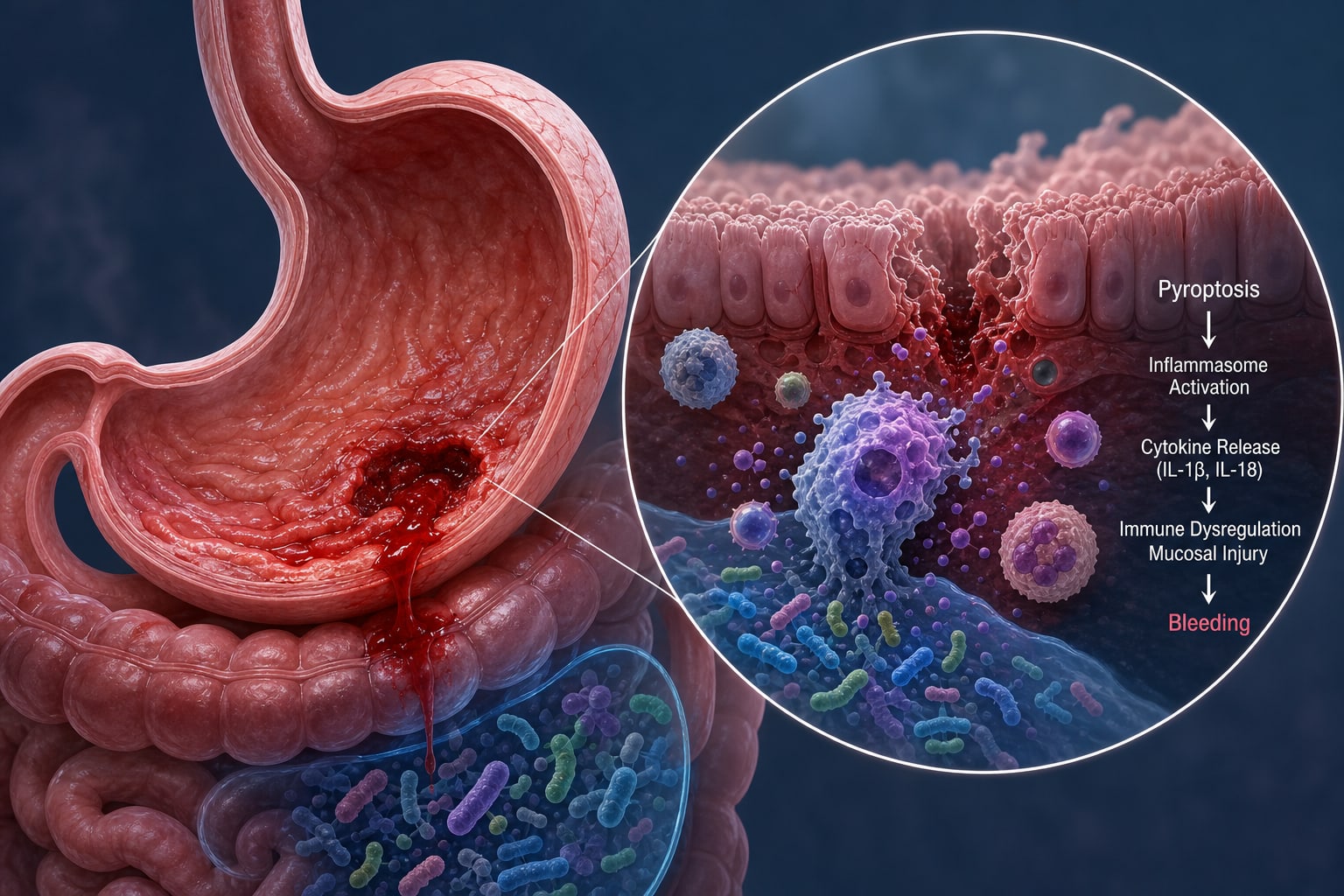
Pyroptosis, immune dysregulation, and gut microbiome dysbiosis are key mechanisms in the pathogenesis of UGIB, leading to mucosal injury and hemorrhage.
-
3
Systemic inflammatory markers like the neutrophil-to-lymphocyte ratio (NLR) and C-reactive protein (CRP) are utilized for UGIB risk stratification.
-
4
Established risk scoring systems for UGIB include the Glasgow-Blatchford Score, Rockall score, and AIMS65, which aid in predicting patient outcomes.
-
5
Emerging therapeutic strategies for UGIB focus on pyroptosis inhibitors and microbiome-modulating interventions for personalized management.