The role and therapeutic prospects of intercellular communication and RNA m6A modification in radiation-induced liver injury - Takeaways - MDSpire

The role and therapeutic prospects of intercellular communication and RNA m6A modification in radiation-induced liver injury

  • By

  • Huicong Yan

  • Yuhang Wang

  • Cunyang Guo

  • Yifei Du

  • Fangqi Tian

  • Ping Xu

  • July 7, 2026

  • 0 min

Share

  • 1

    Radiation-induced liver injury (RILI) is a significant complication of radiotherapy, with incidence rates ranging from 6% to 66% based on radiation dose.

  • 2

    RILI can manifest in acute and chronic phases, with acute symptoms appearing 2 weeks to 3 months post-radiation and chronic issues developing over several months to years.

  • 3

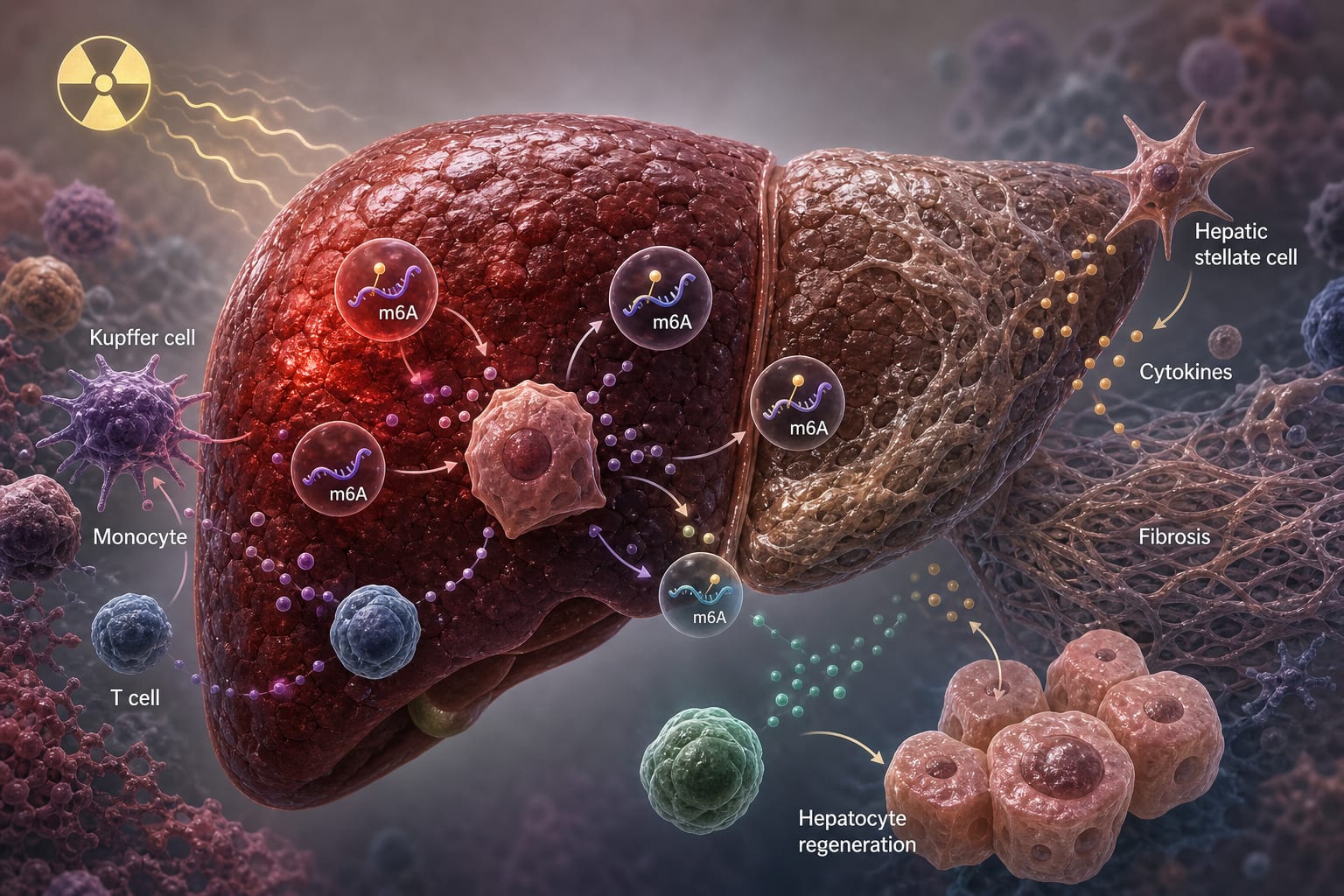
    Ionizing radiation alters the m6A modification landscape of hepatic RNA, disrupting hepatocyte homeostasis and intercellular communication.

  • 4

    Cytokine release and immune cell interactions play crucial roles in the progression of RILI, amplifying pro-inflammatory and profibrotic signaling.

  • 5

    Understanding the interplay between intercellular communication and m6A modification is essential for developing targeted therapies for RILI.

Original Source(s)

Related Content