Comparison of the short-term efficacy of percutaneous endoscopic transforaminal lumbar interbody fusion with the application of a expandable versus PEEK cage for the treatment of lumbar degenerative disease - Takeaways - MDSpire
Coming Soon: Introducing MDSpire News. Learn more
Conexiant’s news site is now MDSpire News. Learn more

Short-Term Outcomes of Percutaneous Endoscopic Transforaminal Lumbar Interbody Fusion Using Expandable Versus PEEK Cages for Lumbar Degenerative Disease

  • By

  • Hao Han

  • Qi Lu

  • Yu Kong

  • Yiming Li

  • Weiqing Kong

  • Jie Li

  • Long Yang

  • Guangchao Cao

  • October 8, 2026

Share

  • 1

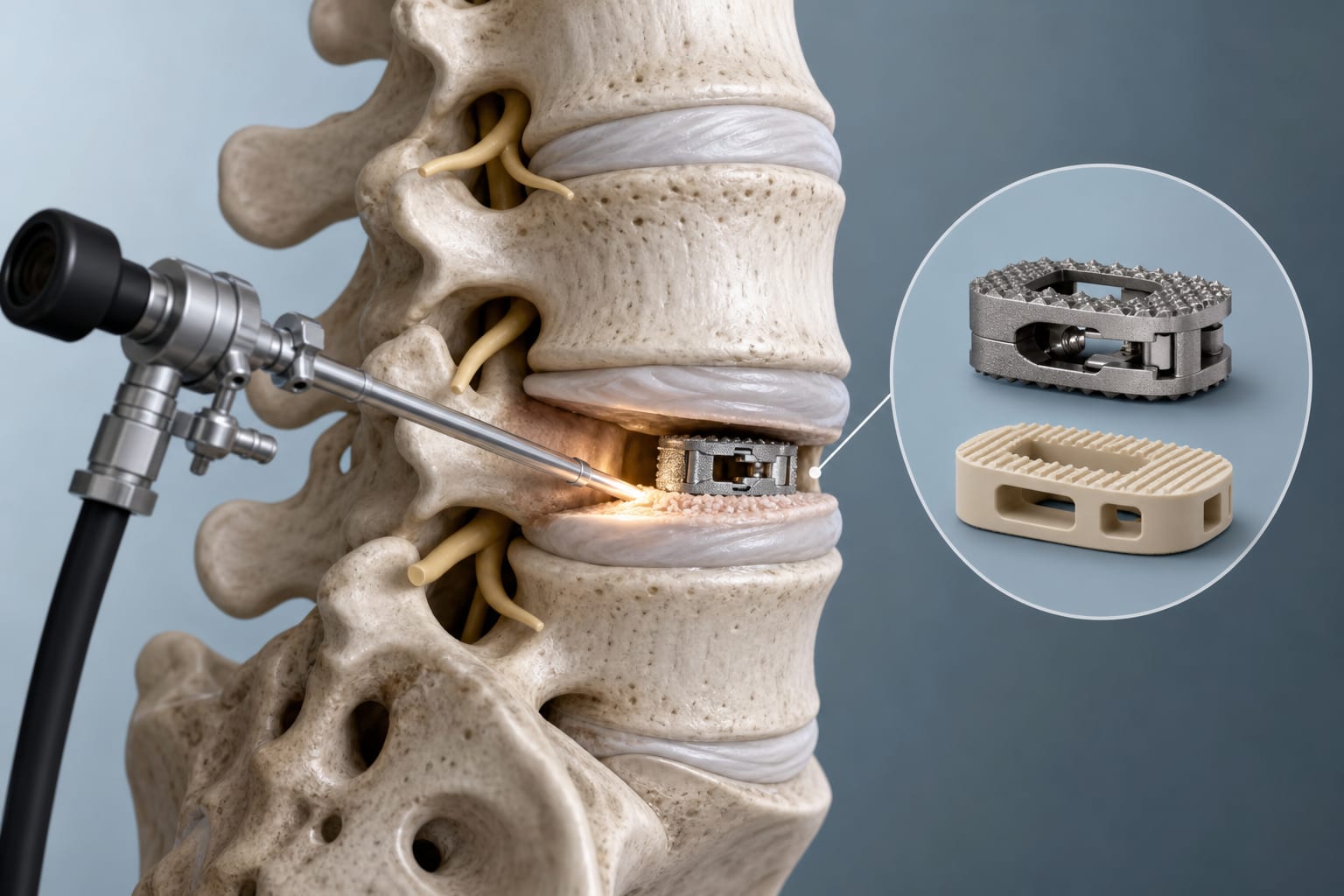
    This retrospective study compared short-term clinical and radiological outcomes of expandable and static PEEK cages in percutaneous endoscopic transforaminal lumbar interbody fusion.

  • 2

    Eligible patients had symptomatic lumbar degenerative disease despite 3 months of systematic conservative treatment and imaging findings consistent with their symptoms.

  • 3

    Patients with severe osteoporosis, severe lumbar stenosis, grade III–IV spondylolisthesis, or prior lumbar surgery were excluded.

  • 4

    All procedures were performed by one senior spinal surgeon using an endoscopic approach for decompression, bone grafting, and interbody fusion.

  • 5

    Expandable cages were described as insertable at low volume and expandable in situ, whereas static PEEK cages have fixed dimensions.

Original Source(s)

Related Content