Intestinal subepithelial myofibroblasts in inflammatory bowel disease: fibroblast heterogeneity, fibrosis, and therapeutic targeting - Takeaways - MDSpire

Intestinal subepithelial myofibroblasts in inflammatory bowel disease: fibroblast heterogeneity, fibrosis, and therapeutic targeting

  • By

  • Fang Li

  • Chao Xu

  • Jun Chen

  • Teng Lei

  • Xigui Tian

  • Yuanling Zhang

  • Guoqing Chen

  • June 24, 2026

  • 0 min

Share

  • 1

    Intestinal fibrosis is a significant complication of inflammatory bowel disease (IBD), leading to bowel strictures and impaired function.

  • 2

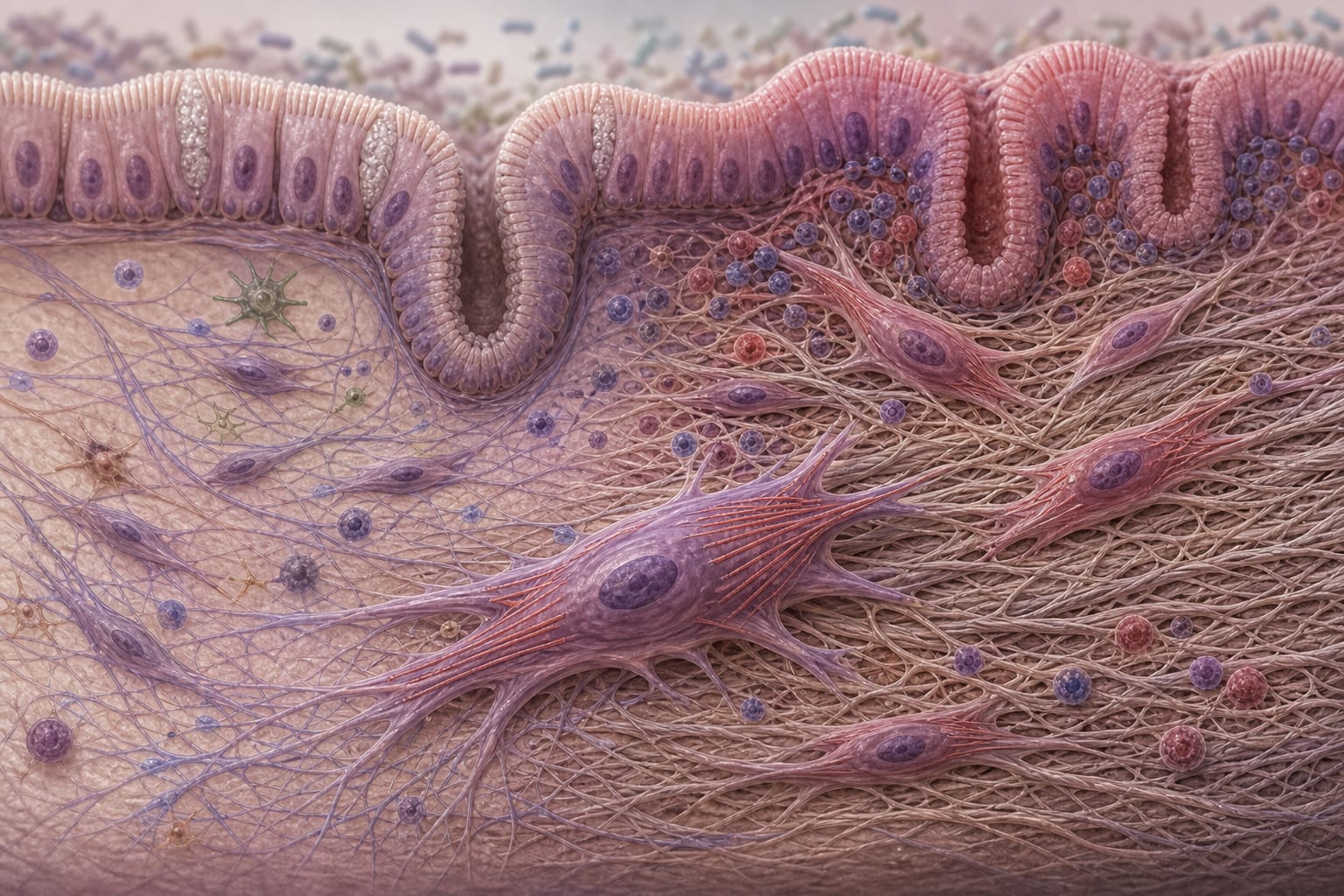
    Intestinal subepithelial myofibroblasts (ISEMFs) are crucial for epithelial homeostasis, mucosal repair, and extracellular matrix remodeling.

  • 3

    Chronic inflammation can lead to pathological activation of ISEMFs, resulting in excessive matrix deposition and progressive fibrosis.

  • 4

    Recent studies highlight fibroblast heterogeneity and identify specific fibroblast subsets linked to fibrostenotic disease in IBD.

  • 5

    Current therapeutic strategies targeting stromal pathways include antifibrotic agents and cytokine-directed therapies for IBD.

Original Source(s)

Related Content