A deep learning model based on combining surface and esophageal ECG data for diagnosis of paroxysmal supraventricular tachycardia - Takeaways - MDSpire

A deep learning model based on combining surface and esophageal ECG data for diagnosis of paroxysmal supraventricular tachycardia

  • By

  • Shuo Li

  • Bin Fu

  • Hui Chi

  • Liuping He

  • Lian Zeng

  • Anran Zhu

  • Yanqun Hou

  • Hongbin Pan

  • Tao He

  • Guoqiang Zhong

  • June 9, 2026

  • 0 min

Share

  • 1

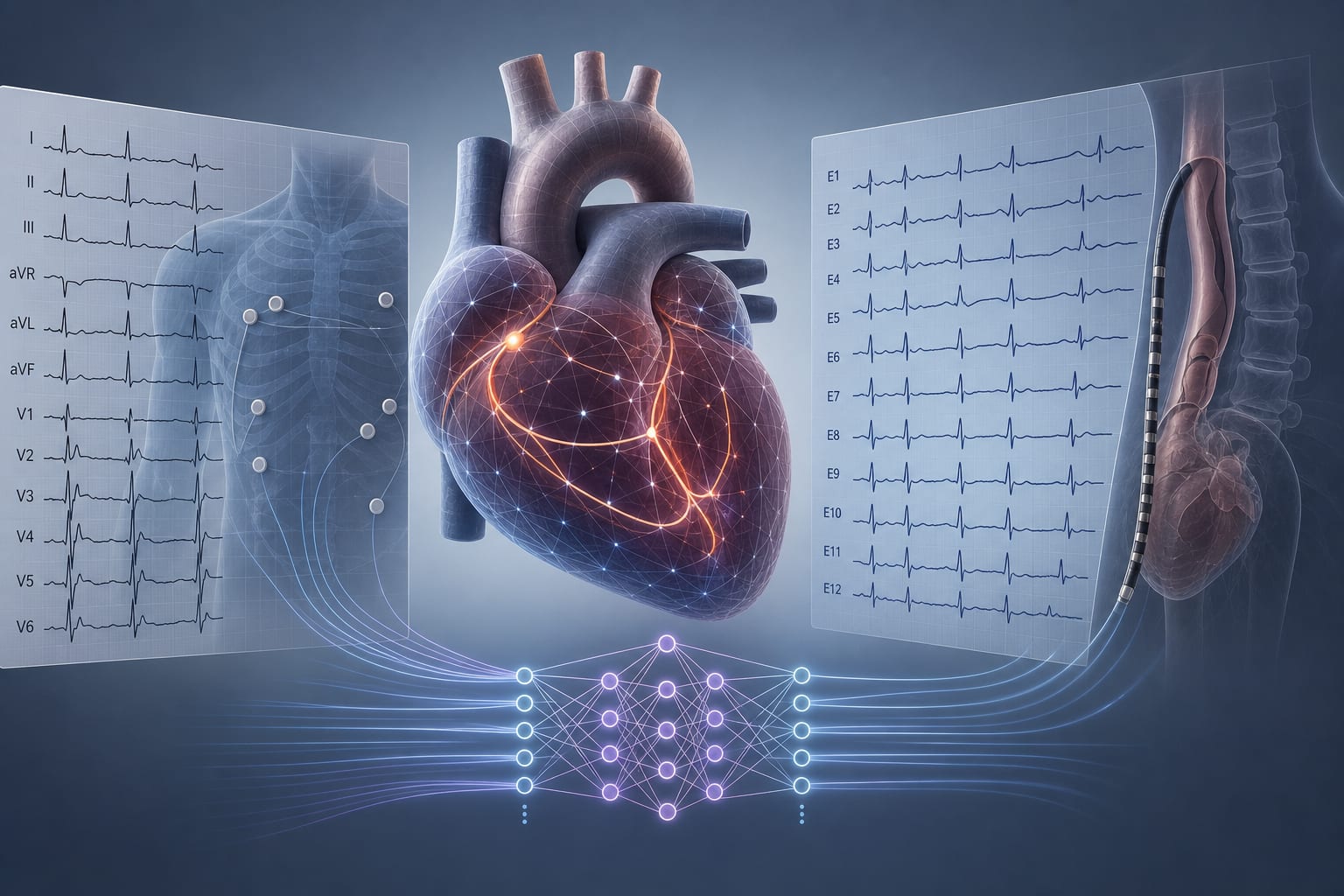
    The study focuses on developing a deep learning model to classify paroxysmal supraventricular tachycardia using surface and esophageal ECG data.

  • 2

    Inclusion criteria for ECG data included successful PSVT induction, narrow QRS complexes, and specific atrioventricular conduction ratios.

  • 3

    The deep learning model utilized the ResNet algorithm, which is effective for feature extraction and classification of ECG signals.

  • 4

    Data were collected from patients undergoing transesophageal electrophysiological studies across four hospitals in Guangxi, China.

  • 5

    The study aims to address gaps in current diagnostics that rely on manual ECG analysis, which can yield inconsistent outcomes.

Original Source(s)

Related Content