NIH Study Links Two Common PFAS to Increased Risk of Aggressive Breast Cancer
-
November 5, 2026
-
1
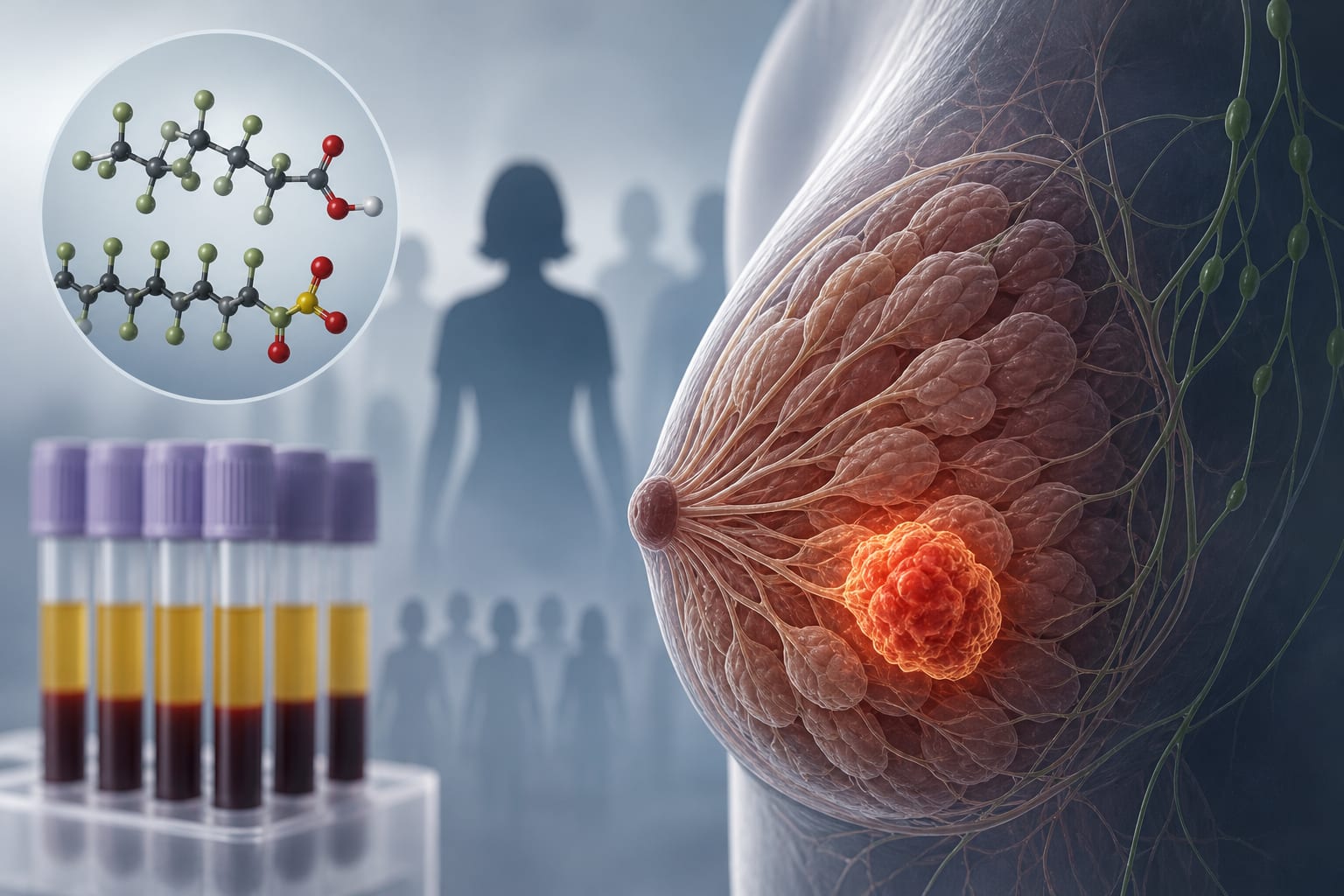
Higher blood concentrations of PFOA and PFOS were associated with increased incidence of estrogen receptor-negative breast cancer, but not clearly with overall breast cancer risk.
-
2
Compared with women in the lowest exposure group, those with the highest PFOA levels had a 67% higher rate of ER-negative breast cancer, and those with the highest PFOS levels had a 93% higher rate.
-
3
Researchers measured 17 PFAS in blood collected years before diagnosis and analyzed 1,609 women who developed breast cancer and 2,269 comparison participants from the Sister Study.
-
4
The Sister Study enrolled 50,884 US and Puerto Rico women ages 35 to 74 who had no breast cancer diagnosis but had a sister with the disease.
-
5
The authors said the study did not test proposed nonhormonal mechanisms and called for further research, including on newer PFAS replacements.
Based on findings from:
Two ‘forever chemicals’ associated with higher risk of aggressive breast cancer in NIH analysis
National Institutes Of Health, 2026.
https://www.nih.gov/news-events/news-releases/two-forever-chemicals-associated-higher-risk-aggressive-breast-cancer-nih-analysis
This content is an AI-generated, fully rewritten summary based on a published scholarly article. It does not reproduce the original text and is not a substitute for the original publication. Readers are encouraged to consult the source for full context, data, and methodology.