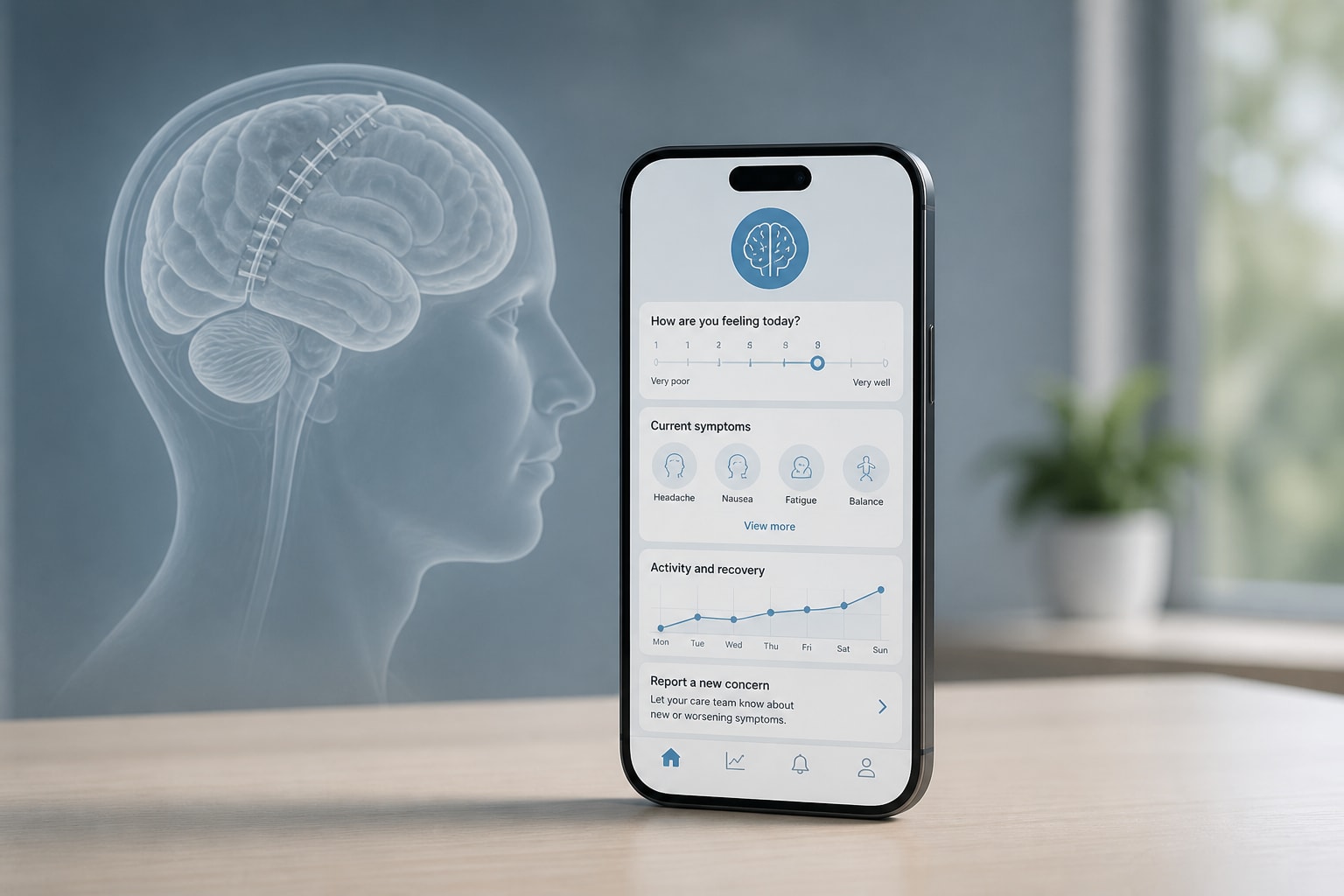
Mobile Device Monitoring of Patient Well-Being and Complications Following Neurosurgical Procedures: A Prospective Cohort Investigation
-
By
-
Alexis Paul Romain Terrapon
-
Erik Schulz
-
Athina Firtinidou
-
Silvio Heinig
-
Lorenzo Bertulli
-
Felix Corr
-
Meltem Gönel
-
Maria Nikolaeva
-
Thomas Petutschnigg
-
Sivani Sivanrupan
-
Jakob Heimer
-
Menno R Germans
-
Christian Zweifel
-
Andreas Raabe
-
Philippe Schucht
-
Luca Regli
-
Marian Christoph Neidert
-
Oliver Bozinov
-
Linda Bättig
-
Martin Nikolaus Stienen
-
September 9, 2026
3 Topic Commentaries
Intracranial Hemorrhages, Central Nervous System Infections, Machine Learning
-
Dr. Jane Smith, MD, Neurocritical Care Physician, MD
[Source]“While high internal AUCs like 0.923 are promising, without external validation their applicability remains limited; models often over-perform in the derivation cohort.”
-
Dr. Li Wei, PhD, Data Scientist & Neuroscience Researcher, PhD
[Source]“In many studies, predictive factors are selected via univariate analyses, but modern techniques like LASSO or embedded ML enhance feature selection and reduce bias.”
-
Dr. Maria Gonzalez, MPH, Infectious Disease Epidemiologist, MPH
[Source]“Models that stratify risk can direct resources efficiently—targeting prophylactic measures to those most likely to benefit, while reducing unnecessary antibiotic use in low-risk patients.”