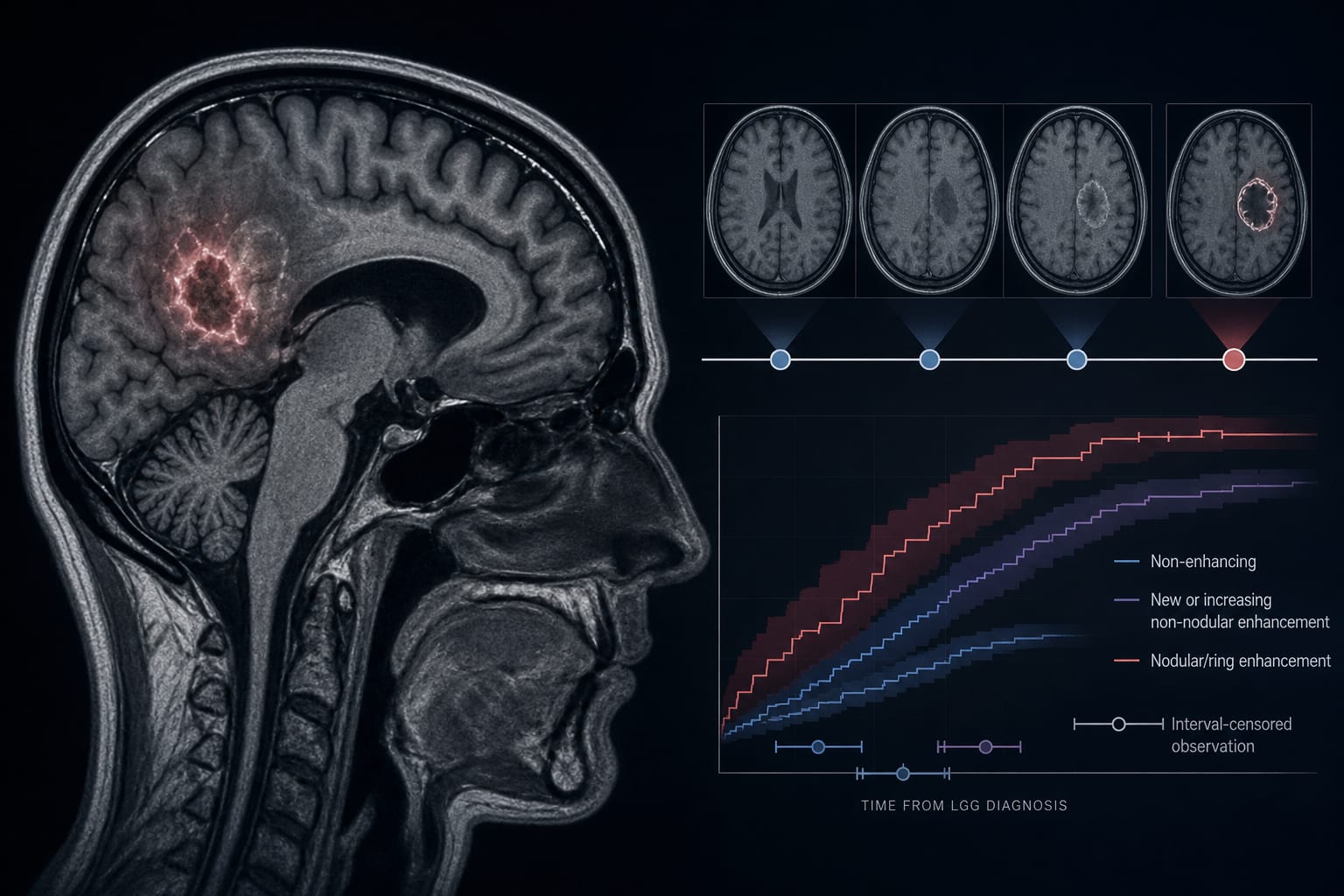
Transformation of Lower-Grade Gliomas to Malignancy: The Role of Contrast Enhancement, Surgical Resection Extent, and Interval-Censored Analysis of Natural History
-
By
-
Baran Atli
-
Maximilian Wartha
-
Matthias Gmeiner
-
Martin Aichholzer
-
Serge Weis
-
Dominik Vorhauer
-
Helga Wagner
-
Tanja Hauer
-
Carlo Serra
-
Petra Böhm
-
Michael Sonnberger
-
Nico Stroh-Holly
-
Stefan Aspalter
-
Kathrin Aufschnaiter
-
Tobias Rossmann
-
Maria Gollwitzer
-
Jawed Ziai
-
Annette Leibetseder
-
Josef Pichler
-
Wolfgang Thomae
-
Christian Dorfer
-
Andreas Gruber
-
Harald Stefanits
-
Philip Rauch
-
September 22, 2026
3 Topic Commentaries
Intracranial Hemorrhages, Central Nervous System Infections, Machine Learning
-
Dr. Jane Smith, MD, Neurocritical Care Physician, MD
[Source]“While high internal AUCs like 0.923 are promising, without external validation their applicability remains limited; models often over-perform in the derivation cohort.”
-
Dr. Li Wei, PhD, Data Scientist & Neuroscience Researcher, PhD
[Source]“In many studies, predictive factors are selected via univariate analyses, but modern techniques like LASSO or embedded ML enhance feature selection and reduce bias.”
-
Dr. Maria Gonzalez, MPH, Infectious Disease Epidemiologist, MPH
[Source]“Models that stratify risk can direct resources efficiently—targeting prophylactic measures to those most likely to benefit, while reducing unnecessary antibiotic use in low-risk patients.”