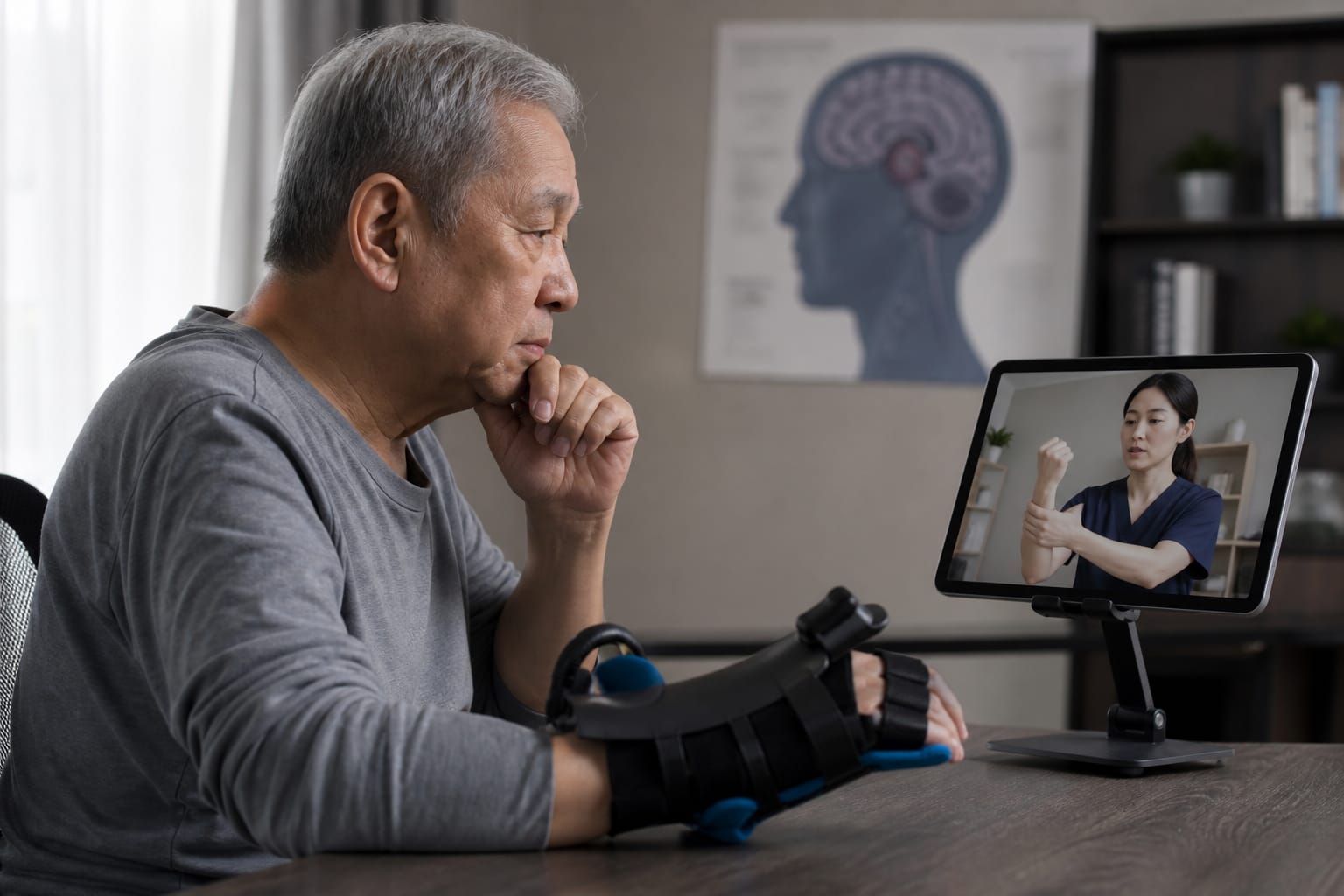
Exploring the Current Landscape and Influencing Factors of Technophobia Regarding Digital Health Technologies in Older Stroke Patients: A Mixed Methods Approach
-
By
-
Yingjie Yang
-
Yongye Wu
-
Zhuoyun Wu
-
Yang Wu
-
Zilu Zhang
-
Yuxia Li
-
September 25, 2026
3 Topic Commentaries
Intracranial Hemorrhages, Central Nervous System Infections, Machine Learning
-
Dr. Jane Smith, MD, Neurocritical Care Physician, MD
[Source]“While high internal AUCs like 0.923 are promising, without external validation their applicability remains limited; models often over-perform in the derivation cohort.”
-
Dr. Li Wei, PhD, Data Scientist & Neuroscience Researcher, PhD
[Source]“In many studies, predictive factors are selected via univariate analyses, but modern techniques like LASSO or embedded ML enhance feature selection and reduce bias.”
-
Dr. Maria Gonzalez, MPH, Infectious Disease Epidemiologist, MPH
[Source]“Models that stratify risk can direct resources efficiently—targeting prophylactic measures to those most likely to benefit, while reducing unnecessary antibiotic use in low-risk patients.”