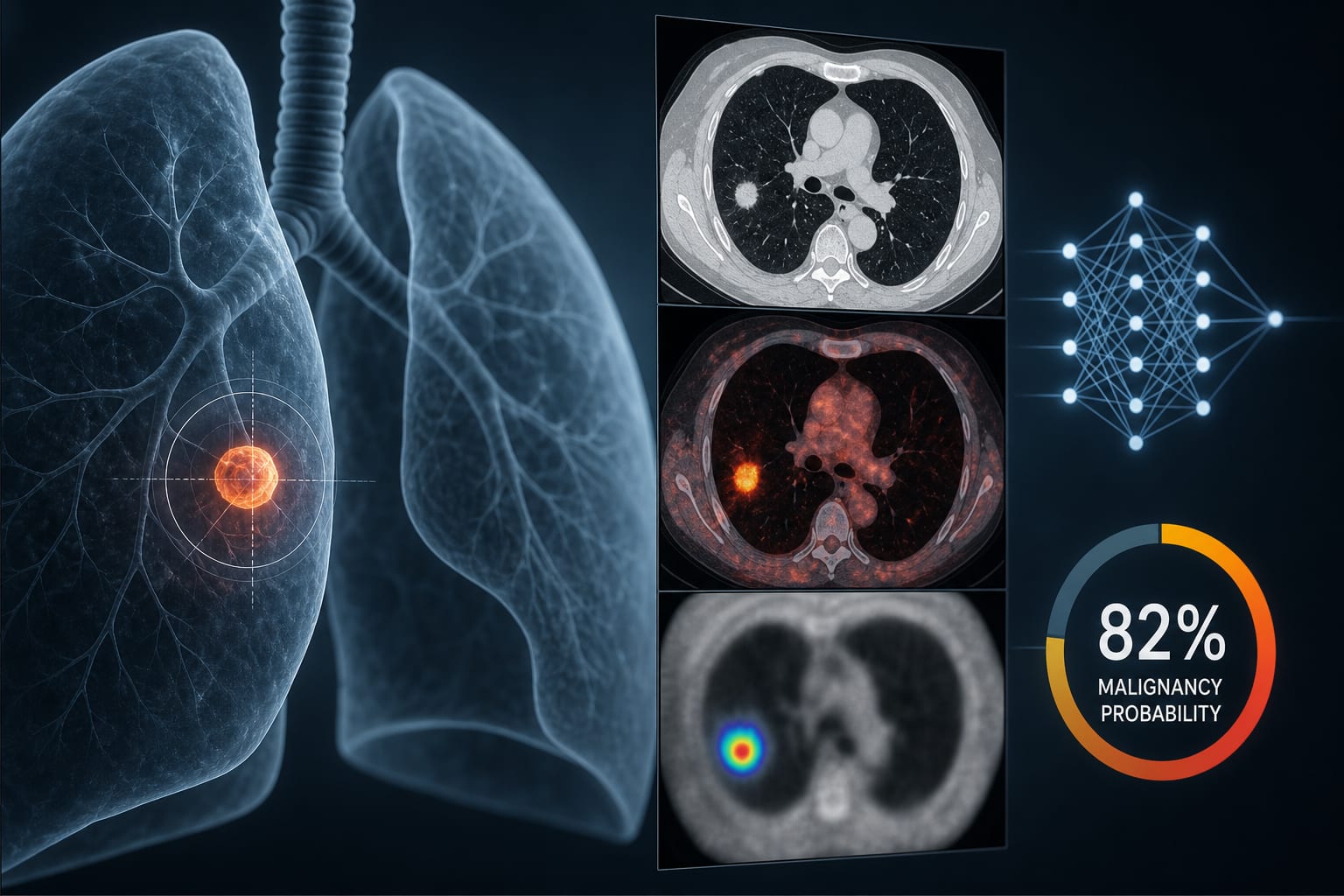
A Comprehensive Pixel-Based Approach for the Automated Labeling and Analysis of Computed Tomography Series: A Proof-of-Concept Investigation
-
By
-
Yutong Wen
-
Anton Sheahan Quinsten
-
Cynthia Sabrina Schmidt
-
Christian Bojahr
-
Judith Kohnke
-
Kamyar Arzideh
-
Sina Warmer
-
Sebastian Blex
-
Ann-Christin Jacoby
-
Max Eberts
-
Hanna Lehmann
-
Olivia Barbara Pollok
-
Mathias Holtkamp
-
Luca Salhöfer
-
Lale Umutlu
-
Michael Forsting
-
Johannes Haubold
-
Felix Nensa
-
Katarzyna Borys
-
René Hosch
-
September 29, 2026
3 Topic Commentaries
Intracranial Hemorrhages, Central Nervous System Infections, Machine Learning
-
Dr. Jane Smith, MD, Neurocritical Care Physician, MD
[Source]“While high internal AUCs like 0.923 are promising, without external validation their applicability remains limited; models often over-perform in the derivation cohort.”
-
Dr. Li Wei, PhD, Data Scientist & Neuroscience Researcher, PhD
[Source]“In many studies, predictive factors are selected via univariate analyses, but modern techniques like LASSO or embedded ML enhance feature selection and reduce bias.”
-
Dr. Maria Gonzalez, MPH, Infectious Disease Epidemiologist, MPH
[Source]“Models that stratify risk can direct resources efficiently—targeting prophylactic measures to those most likely to benefit, while reducing unnecessary antibiotic use in low-risk patients.”