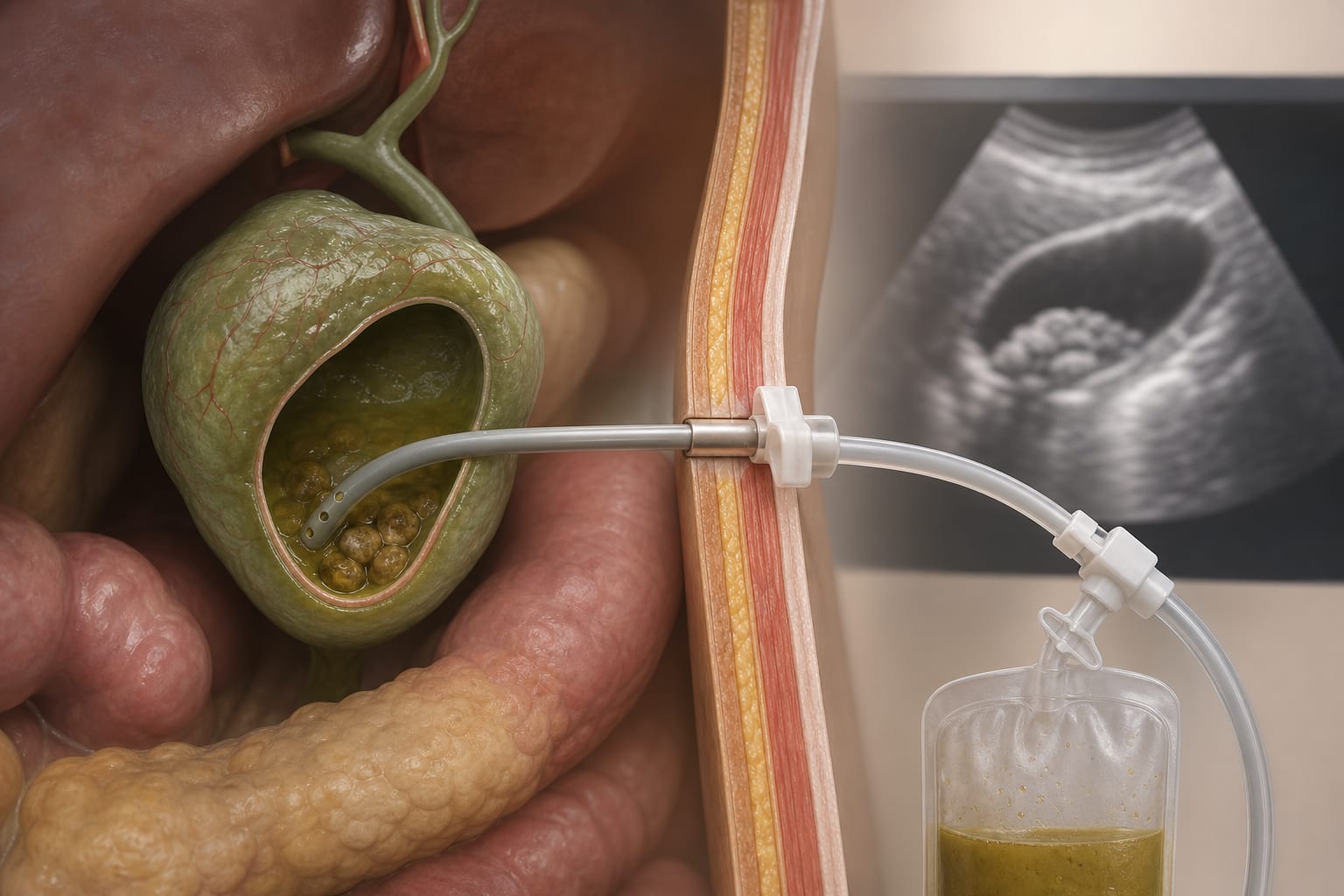
Management of Percutaneous Cholecystostomy Drains: A Consensus Statement
-
By
-
Mohammed Al Azzawi
-
Carolyn Cullinane
-
Michael Devine
-
Conor Toale
-
Stephen O’Brien
-
Matthew Davey
-
Czara Kennedy
-
Aine O’Neill
-
Nicola Raftery
-
Eanna James Ryan
-
Noel Donlon
-
Jessie A. Elliott
-
William B. Robb
-
Arnold D. K. Hill
-
Jarlath Bolger
-
Irish Surgical Research Collaborative Group—Percutaneous Drainage Delphi Expert Panel
-
Mahmoud Abdelmoeiti
-
Mohammed Al Kayal
-
Mayilone Arumugasamy
-
Chwanrow Baban
-
Kevin Barry
-
Ian Brennan
-
Abeeda Butt
-
Paul Caroll
-
Liam Devane
-
Claire Donohoe
-
Christina Fleming
-
Niamh Foley
-
Sean Johnston
-
Dara Kavanagh
-
David Kearney
-
Michael Kerin
-
Noel Lynch
-
Graeme MacAulay
-
Achille Mastrosimone
-
Niamh McCawley
-
Orla McCormack
-
Mcgrath Andrew
-
Etain McGuinness
-
Deborah McNamara
-
Dough Mullholland
-
Brenda Murphy
-
Thomas Murphy
-
Peter Neary
-
Damien O'Neill
-
Cristoir O’Sullibhean
-
Adrian O’Sullivan
-
Samir Pathak
-
Colin Peirce
-
Paul Ridgway
-
Andrew G Robertson
-
Kevin P Sheahan
-
Mark Sheehan
-
Bohdan Smajer
-
Anthony Stafford
-
Michael Sugrue
-
Shibojit Talukder
-
June 5, 2026
-
0 min
3 Topic Commentaries
Intracranial Hemorrhages, Central Nervous System Infections, Machine Learning
-
Dr. Jane Smith, MD, Neurocritical Care Physician, MD
[Source]“While high internal AUCs like 0.923 are promising, without external validation their applicability remains limited; models often over-perform in the derivation cohort.”
-
Dr. Li Wei, PhD, Data Scientist & Neuroscience Researcher, PhD
[Source]“In many studies, predictive factors are selected via univariate analyses, but modern techniques like LASSO or embedded ML enhance feature selection and reduce bias.”
-
Dr. Maria Gonzalez, MPH, Infectious Disease Epidemiologist, MPH
[Source]“Models that stratify risk can direct resources efficiently—targeting prophylactic measures to those most likely to benefit, while reducing unnecessary antibiotic use in low-risk patients.”