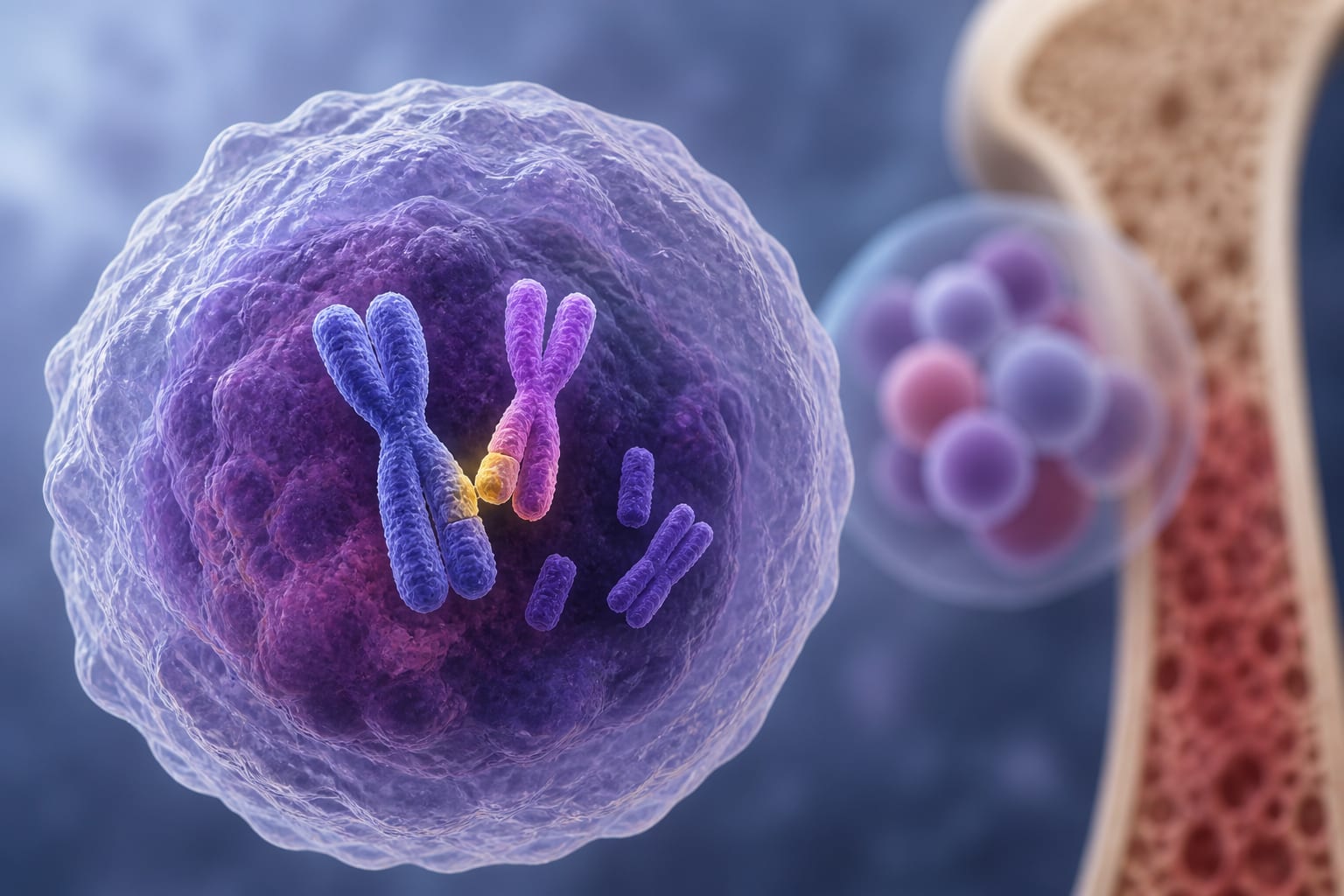
Amendment: Outcomes of Transplantation in Acute Lymphoblastic Leukemia with Philadelphia Chromosome and Additional Cytogenetic Abnormalities: Research by the Acute Leukemia Working Party of the European Society for Blood and Marrow Transplantation
-
By
-
Arnon Nagler
-
Jordi Esteve
-
Jacques-Emmanuel Galimard
-
Depei Wu
-
Erlie Jiang
-
Nathalie Dhedin
-
Anne Sirvent
-
Jan Vydra
-
Jakob Passweg
-
Bruno Lioure
-
Jaime Sanz
-
Jurjen Versluis
-
Yajing Xu
-
Cristina Castilla-Llorente
-
Rodrigo Martino Bufarull
-
Victoria Potter
-
Nour Ben Abdeljelil
-
Eolia Brissot
-
Ali Bazarbachi
-
Bipin Savani
-
Sebastian Giebel
-
Mohamad Mohty
-
Fabio Ciceri
-
August 31, 2026
3 Topic Commentaries
Intracranial Hemorrhages, Central Nervous System Infections, Machine Learning
-
Dr. Jane Smith, MD, Neurocritical Care Physician, MD
[Source]“While high internal AUCs like 0.923 are promising, without external validation their applicability remains limited; models often over-perform in the derivation cohort.”
-
Dr. Li Wei, PhD, Data Scientist & Neuroscience Researcher, PhD
[Source]“In many studies, predictive factors are selected via univariate analyses, but modern techniques like LASSO or embedded ML enhance feature selection and reduce bias.”
-
Dr. Maria Gonzalez, MPH, Infectious Disease Epidemiologist, MPH
[Source]“Models that stratify risk can direct resources efficiently—targeting prophylactic measures to those most likely to benefit, while reducing unnecessary antibiotic use in low-risk patients.”