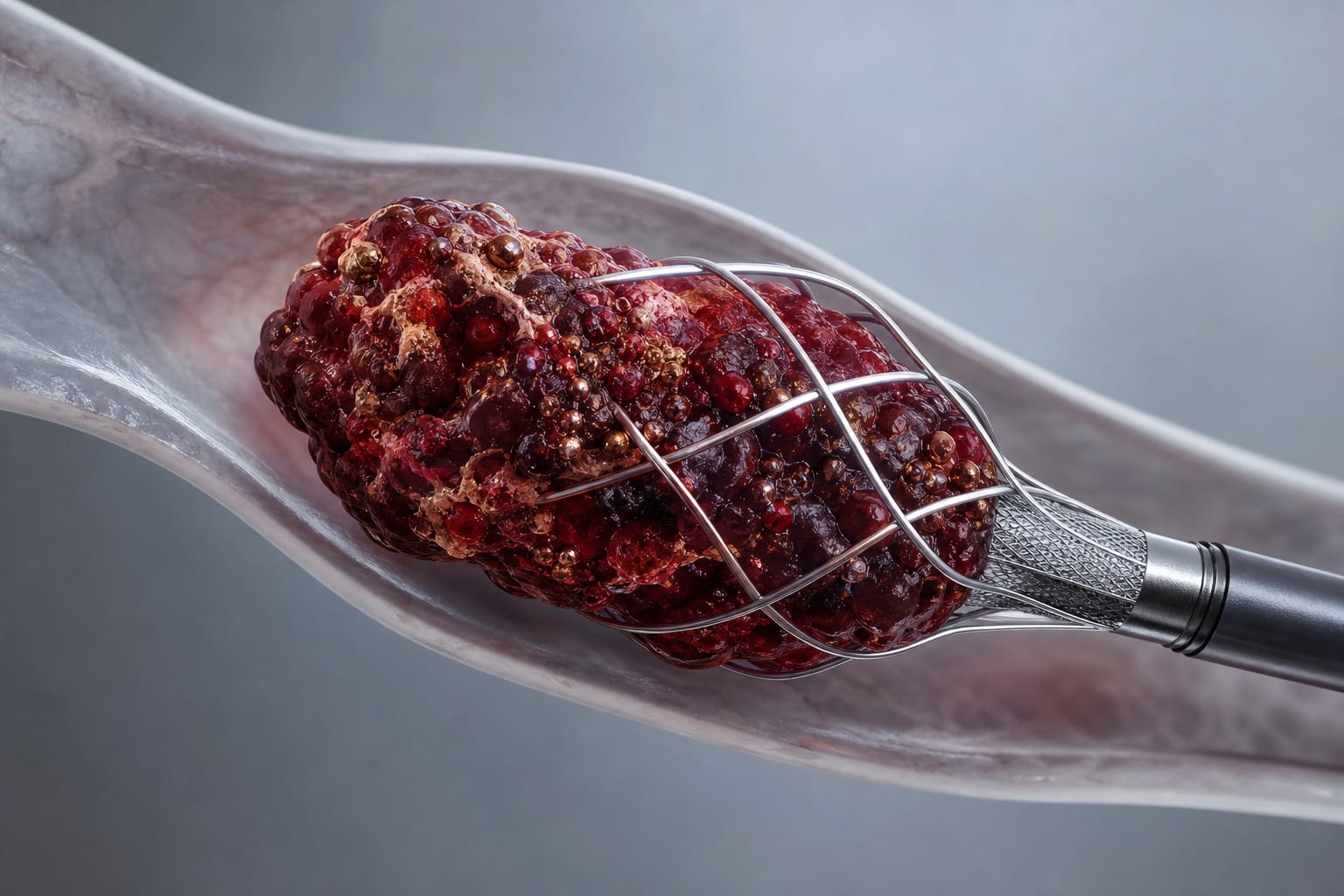
Elevated concentrations of cell-free hemoglobin and iron found in cerebral thrombi of stroke patients prior to the Omicron variant: new contributors to the prothrombotic effects of SARS-CoV-2
-
By
-
María Payá
-
Cristian Alcahut-Rodríguez
-
Rosa A. Barbella-Aponte
-
Francisco Hernández-Fernández
-
Juan D. Molina-Nuevo
-
Gemma Barroso-García
-
Beatriz Castro-Robles
-
Susana López-López
-
Lourdes Arias-Salazar
-
Óscar Ayo-Martín
-
Jorge García-García
-
Blanca Yélamos-Sanz
-
Natalia García-Flores
-
Alba G. Arandilla
-
Rafael Moreno-Luna
-
Alicia Aliena-Valero
-
Isabel Vielba-Gómez
-
José I. Tembl
-
Juan B. Salom
-
Gemma Serrano-Heras
-
Tomás Segura
-
August 29, 2026
3 Topic Commentaries
Intracranial Hemorrhages, Central Nervous System Infections, Machine Learning
-
Dr. Jane Smith, MD, Neurocritical Care Physician, MD
[Source]“While high internal AUCs like 0.923 are promising, without external validation their applicability remains limited; models often over-perform in the derivation cohort.”
-
Dr. Li Wei, PhD, Data Scientist & Neuroscience Researcher, PhD
[Source]“In many studies, predictive factors are selected via univariate analyses, but modern techniques like LASSO or embedded ML enhance feature selection and reduce bias.”
-
Dr. Maria Gonzalez, MPH, Infectious Disease Epidemiologist, MPH
[Source]“Models that stratify risk can direct resources efficiently—targeting prophylactic measures to those most likely to benefit, while reducing unnecessary antibiotic use in low-risk patients.”