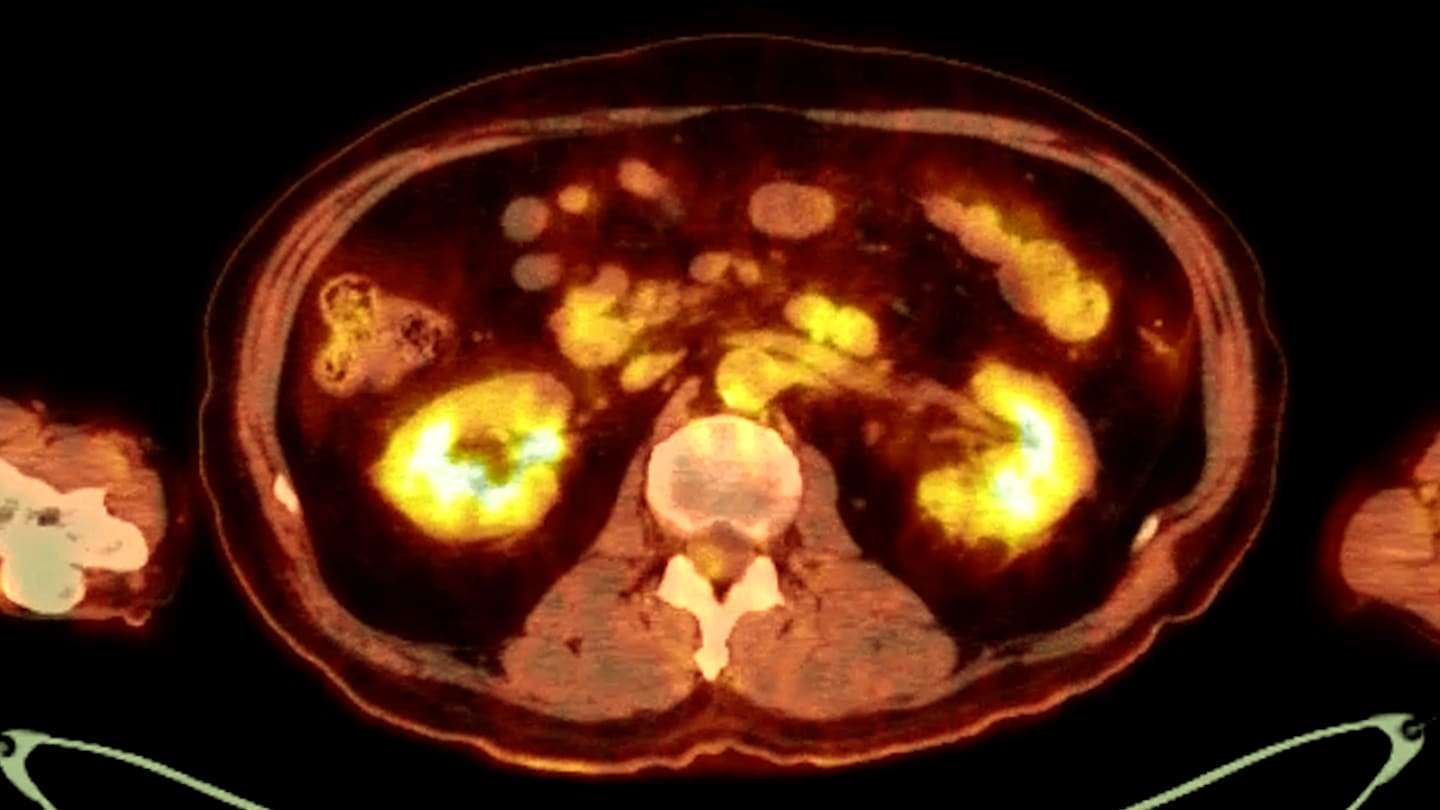
FASTRACK II: non-randomised trial of SABR in inoperable or high-risk renal cell carcinoma
Shankar Siva, MBBS PhD; David Pryor, MBBS; Jarad Martin, PhD DMed; Nicholas Hardcastle, PhD; Daniel Moon, MBBS; Tomas Kron, PhD; et al.
May 17, 2026
- The Lancet Oncology
- The Lancet Oncology, Volume 27, Issue 6, Pages 711–720
- 10.1016/S1470-2045(26)00091-4
Evidence before this study
We used broad search strategy across PubMed and Embase for articles of any type published in English between Jan 1, 1995, and Dec 5, 2025, with the search string: (“radiotherapy” OR “radiation therapy” OR “stereotactic” OR “cyberknife” OR “sabr” OR “sbrt”) AND (“Kidney neoplasms” OR “kidney neoplasm” OR “renal neoplasms” OR “kidney cancer” OR “renal cell carcinoma” OR ““Carcinoma, Renal Cell” OR “renal cell cancer” OR “renal adenocarcinoma”). One prospective trial of small renal cancers compared thermal ablation with stereotactic ablative body radiotherapy (SABR), with five (42%) of 12 patients randomly assigned to thermal ablation not receiving the planned treatment and 11 (92%) of 12 patients randomly assigned to SABR receiving SABR as intended. Although several retrospective studies, systematic reviews, and meta-analyses of SABR for primary renal cell carcinoma have been published, to date, prospective clinical trial evidence for SABR has been uniformly confined to small, single-institutional trials.
Added value of this study
To our knowledge, FASTRACK II is the first multicentre clinical trial of a non-surgical definitive therapy for primary renal cell carcinoma. This non-randomised trial enrolled patients with medically inoperable or technically high-risk primary renal cell carcinoma across eight centres in Australia and the Netherlands. Despite a larger median tumour size than in many pre-existing prospective trials of surgery or SABR in primary renal cell carcinoma, there were no instances of local progression, and no patients died from cancer during the study period. Few treatment-related adverse events and declines in renal function were noted. Notably, the tumours that were treated were larger and more complex than could be effectively expected to be treated with thermal ablation approaches.
Implications of all the available evidence
Taken together, the results of FASTRACK II and previous single-institution clinical trials support SABR as a therapeutic treatment for patients with inoperable or high-risk primary renal cell carcinoma. The preservation of renal function and the associated adverse event profile appears similar to other nephron-sparing treatment options. The observed oncological outcomes justify the design of a randomised clinical trial of surgery versus SABR for patients with primary renal cell carcinoma.
Source: The Lancet Oncology